Why Dental Care Matters More Than People Think
By age three, most dogs already show some sign of dental disease. It usually starts as plaque, a soft film of bacteria that builds up along the gumline within a day or two of eating. Left alone, plaque hardens into tartar within about a week, and tartar does not brush off. At that point it has to be removed professionally, and the bacteria trapped underneath it start working on the gums.
The part that surprises most owners is that dental disease does not stay in the mouth. Once the gums are inflamed, bacteria can enter the bloodstream through the damaged tissue and reach the heart, liver, and kidneys. Chronic dental disease is linked to real wear on these organs over years. A few minutes of brushing a week is a small effort next to that.
Signs of Dental Problems in Dogs
Bad breath is the first thing most people notice, and it is worth taking seriously rather than just masking with a chew or a mint spray. Other signs include red or swollen gums, a brown or yellow crust along the base of the teeth, a dog that pulls away from having its mouth touched, dropping food while eating, or chewing more on one side of the mouth than the other. Loose teeth or visible pus are signs the disease has already progressed and need a vet visit, not a home routine.
Small breeds tend to have more crowded teeth and thinner jawbones, which means dental disease often shows up earlier and progresses faster than in larger dogs. If you have a small breed, starting a routine early matters even more than usual.
How to Brush Your Dog's Teeth
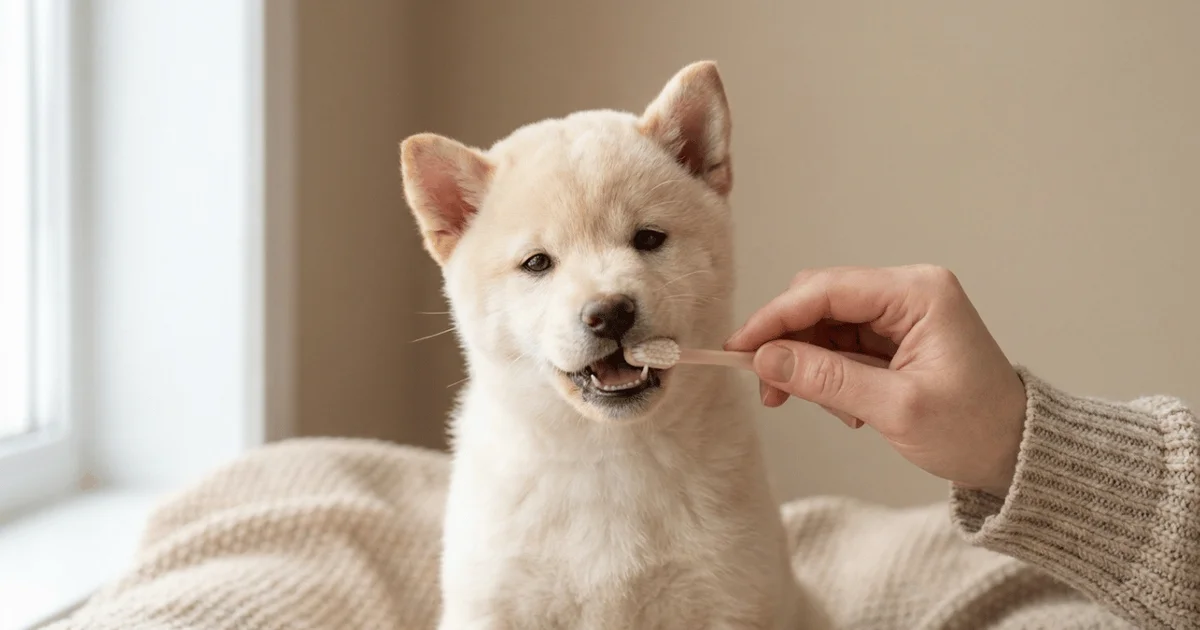
Use a toothbrush made for dogs, either a finger brush or a long-handled one, and a toothpaste made for dogs. Human toothpaste often contains xylitol or fluoride in amounts that are unsafe for dogs, so it should never be used. Dog toothpaste comes in flavors like chicken or peanut butter, which makes the whole process easier.
Lift the lip gently and brush in small circles along the gumline, angling the bristles slightly toward the gum. The outer surfaces of the teeth matter most, since that is where plaque builds up fastest and where your dog's tongue does not naturally clean. You do not need to get the inside surfaces or force the mouth wide open. Two or three minutes covering the outer teeth on both sides is enough.
Getting Your Dog Used to It
Do not start with a full brushing session on day one. Begin by just touching your dog's mouth and lips for a few seconds, then reward with a treat. Over a few days, work up to rubbing a bit of dog toothpaste on your finger and letting them lick it off, then to rubbing it along the gumline, and only then introduce the brush itself. Rushing this step is the main reason brushing attempts fail and dogs start associating it with stress.
Daily brushing is ideal, but three to four times a week still makes a real difference compared to none at all. Consistency matters more than perfection here.
Dental Chews, Water Additives, and Other Tools
Dental chews work through mechanical scraping as your dog bites down, which helps knock plaque loose before it hardens. Look for the VOHC (Veterinary Oral Health Council) seal on the packaging, which means the product has actually been tested to show a measurable reduction in plaque or tartar rather than just marketed as dental-friendly. Chews are a supplement to brushing, not a replacement for it.
Water additives are a low-effort option that some dogs tolerate better than brushing, though the evidence for how much they actually reduce plaque is weaker than for brushing or VOHC-approved chews. Dental wipes are another middle option for dogs that reject a brush but will allow a finger near their mouth.
What Professional Cleaning Involves
A professional dental cleaning is done under general anesthesia, which allows the vet to clean below the gumline where tartar does the most damage and where your dog would never tolerate a tool otherwise. It usually includes scaling, polishing, a full mouth exam, and dental X-rays to check for problems hiding under the gums that are invisible from the outside.
How often your dog needs this depends on breed, age, and how consistent your home routine is. Some dogs go years between cleanings with regular brushing at home. Others, especially small breeds or dogs that never got used to brushing, may need one every one to two years. Your vet can tell you where your dog's mouth actually stands at a routine check-up.
Building a Routine That Sticks
Pick a time of day that is already part of your routine, like right before or after a walk, so brushing becomes attached to something you already do without thinking. Keep the toothbrush and toothpaste somewhere visible, not tucked away in a drawer you forget about. If you have more than one dog, brush them back to back so the habit stays on a fixed schedule instead of drifting.
Diet plays a supporting role too. Fresh food made from whole ingredients does not leave behind the sticky starch residue that some processed treats do, which means less material for plaque to form around between brushings. Pawby Kitchen's meals are made from whole, gently cooked ingredients with nothing sticky or artificial added, so mealtime is not working against the dental care you are already doing at home.