What "Sensitive Stomach" Actually Covers
"Sensitive stomach" is a catch-all phrase for dogs that consistently react to food in some way. Loose stools more days than not, vomiting after eating, excessive gas, or stools that swing between loose and hard are the most common signs. The causes range from true food allergies to ingredient intolerances to food that is simply too processed and hard to digest.
The term gets used loosely, which means it does not tell you much on its own. What matters is whether the issue is about a specific ingredient, the overall quality of what the dog is eating, or something medical that needs a vet involved. If your dog has been having digestive issues for more than a few weeks and has lost weight or seems unwell, a vet visit first makes sense before changing the diet.
Find the Trigger First
Before changing food, it helps to know what you are working with. If the problem appeared after switching to a new food, the new food is the most obvious culprit. If it has been going on for months regardless of what you feed, the issue may be with an ingredient the dog has always eaten, or with the quality of food overall.
Dogs with true food allergies most often react to proteins rather than grains, despite what a lot of marketing suggests. The most common culprits are beef and dairy, followed by chicken, wheat, and egg. If you have never tested for this, an elimination diet is the most reliable way to identify a specific protein trigger. Pick one novel protein your dog has never eaten before, one simple carb, and feed only that for six to eight weeks while watching whether symptoms clear.
Proteins That Tend to Be Easier to Digest
Lean, simply cooked meat is easier on the digestive system than fatty cuts or heavily processed protein sources. Plain boiled or baked chicken, turkey, or white fish with no seasoning are classic starting points for dogs recovering from digestive upset, and they work well as a long-term base diet for dogs with ongoing sensitivities too.
Fish is particularly useful because it provides protein alongside omega-3 fatty acids that reduce gut inflammation. Dogs with sensitive stomachs that also show skin symptoms, like recurring itching or a dull coat, often do better on a fish-based diet than on chicken or beef. Chicken is fine for most dogs but is also one of the more common trigger proteins, so if it has been the primary protein for a long time and the stomach issues are ongoing, trying something else is worth considering.
Carbs and Fiber
Simple, easy-to-digest carbohydrates are gentler on a sensitive gut than complex grains or high-fiber vegetable mixes. White rice is the classic choice because it is bland, easy to digest, and provides quick energy without much stress on the gut. Plain boiled potato or sweet potato are alternatives that also provide some fiber. Rice in particular is one of the safest base carbs for dogs with digestive issues and is the starting point for most bland diets.
Plain pumpkin puree (not pie filling, which contains sugar and spices) is one of the most practical additions for dogs with recurring digestive issues. The soluble fiber helps normalize stool consistency in both directions. It firms up loose stools and softens overly hard ones. One to two tablespoons mixed into meals is usually enough. It is also one of the few things vets consistently recommend for at-home digestive support.
Why Fresh Food Often Helps
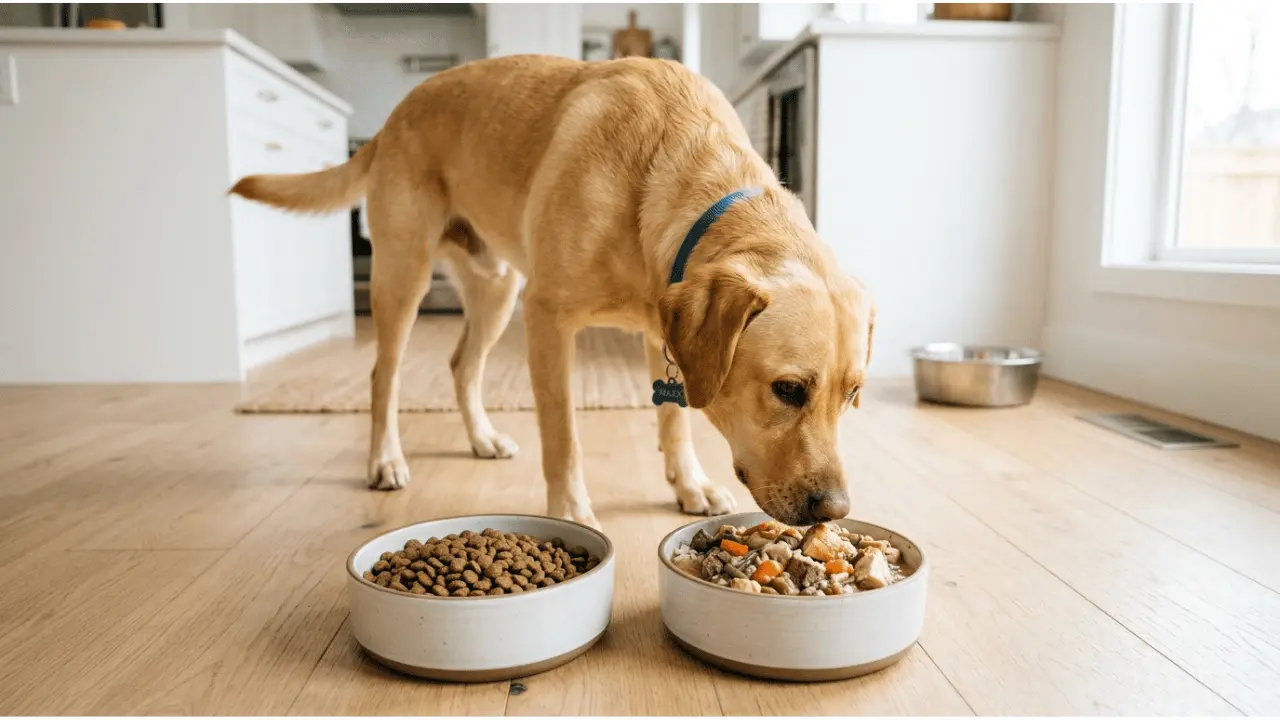
Many dogs with sensitive stomachs do noticeably better on fresh food than on kibble, and the reason is mostly about digestibility. Fresh cooked meat and vegetables are closer to their natural form, lower in starch, higher in moisture, and free of the preservatives and artificial additives that can irritate the gut lining in some dogs. The processing required to make dry kibble shelf-stable changes the food in ways that not every dog's digestive system handles well.
A shorter ingredient list also makes troubleshooting much easier. If your dog is eating a fresh meal with five recognizable ingredients and something goes wrong, you have a short list to work through. If the food has thirty ingredients, several listed as vague categories, narrowing it down takes much longer. This is one reason why a simple food transition to fresh food, done gradually over a week or two, often resolves issues that months of premium kibble switching did not fix.
A Simple Starting Point
The standard reset diet for a dog with active stomach issues is plain boiled protein and white rice in roughly a 2:1 ratio, protein to rice. No seasoning, nothing added. Most vets recommend this after vomiting or diarrhea to let the gut settle before reintroducing the normal diet.
Once stools have been stable for two or three days, start mixing the long-term diet in gradually over seven to ten days, increasing the proportion of the new food each day. For a dog with a consistently sensitive stomach, that long-term diet should be simple, made from recognizable ingredients, and free of the common additives and fillers found in many commercial foods. If cooking at home every day is not practical, Pawby Kitchen's fresh meals are made with simple whole ingredients and are gentle enough for dogs that have always had a tricky stomach.