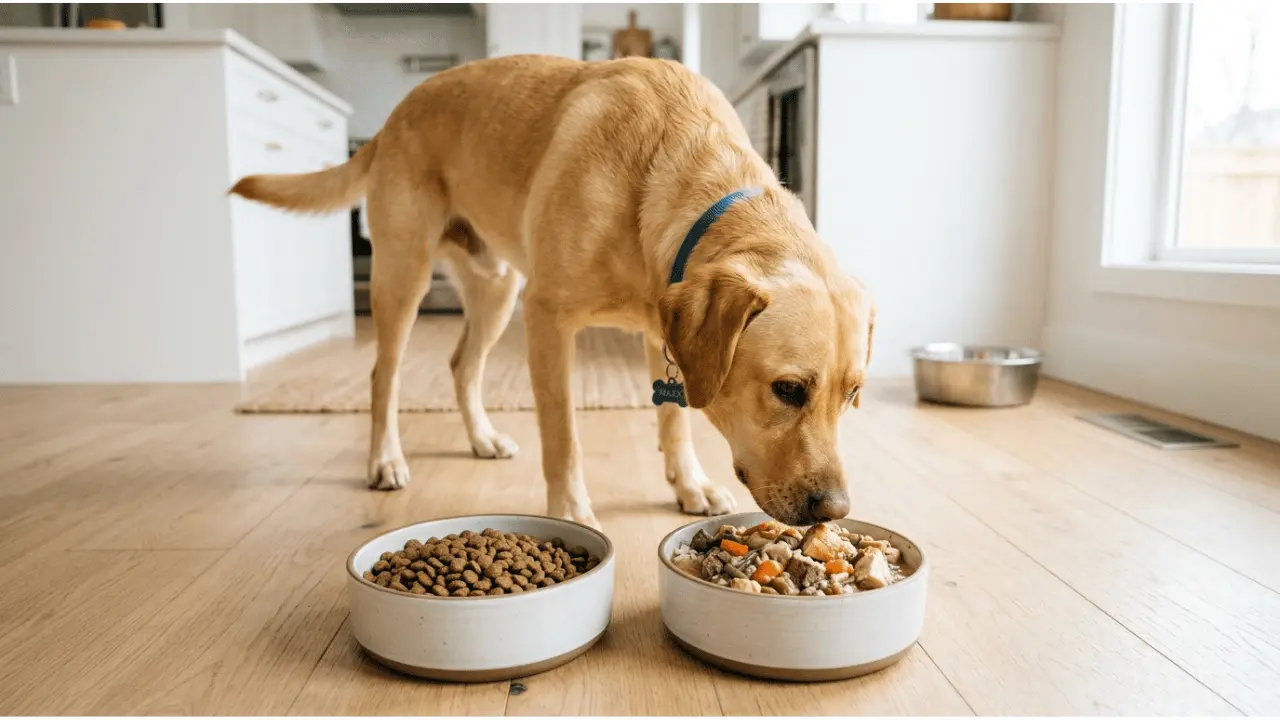
Changing your dog's food abruptly is one of the most reliable ways to cause diarrhea, vomiting, and a sudden loss of interest in eating. The gut microbiome needs time to adjust to different ingredients, protein sources, and fiber levels. A transition done over 10 to 14 days avoids most of the digestive upset and makes the new food much more likely to stick.
The 10-Day Transition Schedule
Days 1 to 3: serve 75 percent old food and 25 percent new food mixed together. Days 4 to 6: move to 50 percent each. Days 7 to 9: 25 percent old food and 75 percent new. From day 10 onward: serve the new food only.
If your dog shows loose stools or vomiting at any stage, slow down. Stay at the current ratio for an extra two to three days before moving forward. Some dogs, particularly those with sensitive stomachs or those switching from a highly processed diet to fresh food, need a full three weeks rather than two.
Loose stools for the first 3 to 5 days are normal when switching from dry to fresh food. The gut is adjusting to significantly more moisture and different fiber sources. As long as your dog is alert and not vomiting, continue at the same pace.
Switching from Kibble to Fresh Food
This transition tends to be the one that causes the most confusion because the foods look so different. Mixing them in the bowl is fine and works well. Some dogs are initially suspicious of the texture change but usually come around within a few days once they smell the fresh food.
One thing to watch for is the volume difference. Fresh food has much higher moisture content than kibble, so the correct portion of fresh food will look like significantly more food in the bowl than the kibble portion did. This is normal. You are not overfeeding if you are following the fresh food portion guidelines correctly.
What to Do If Your Dog Refuses the New Food
Some dogs refuse anything new on principle. If your dog is eating the old portion and leaving the new food untouched, try mixing the new food in more thoroughly so they cannot pick around it. With fresh food, warming it slightly to bring out the aroma often helps reluctant dogs engage with it.
Do not add extra treats or table scraps during a transition period. It confuses the picture and can reinforce refusal behavior. If genuine refusal continues beyond a week with no digestive cause, check with your vet to rule out an underlying issue.
What to Expect After the Transition
Most dogs on fresh food show firmer stools, more consistent energy, and improved coat condition within three to four weeks. These changes take time because nutritional improvements work through the body gradually. Do not expect to see them in the first week.