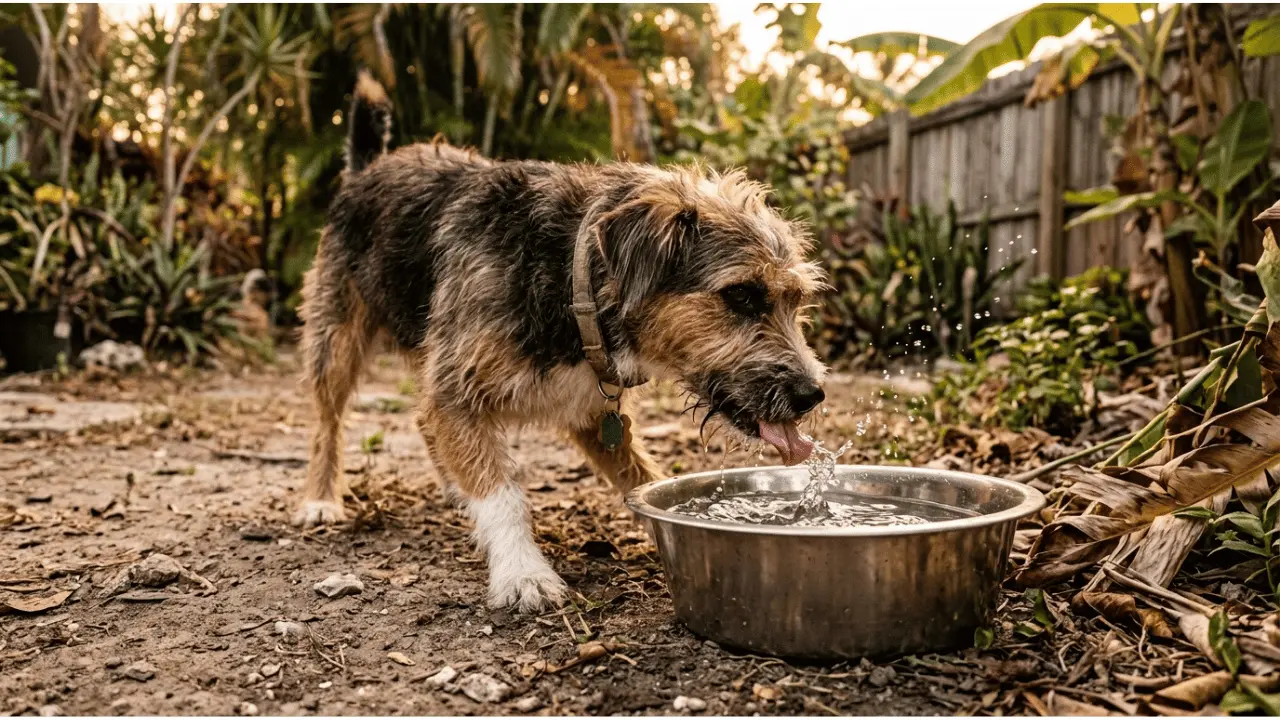
Dehydration is one of those problems that can go from minor to serious faster than most owners expect, especially in a warm climate. Dogs lose water through panting, urination, and even breathing, and they do not always drink enough to compensate on their own. Knowing what to look for early gives you time to act before it becomes a vet visit.
The Most Reliable Signs to Check
The skin turgor test is the most useful home check. Gently pinch the skin on the back of your dog's neck or between the shoulder blades, then release. In a well-hydrated dog the skin snaps back immediately. If it stays tented or returns slowly, your dog is likely dehydrated. This test is most accurate when you already know what your dog's normal skin elasticity feels like, so it is worth practicing on a healthy day.
Gum color and moisture are also reliable indicators. Healthy gums are pink and moist. Pale, dry, or tacky gums suggest dehydration. Press a finger against the gum briefly and release. The color should return within two seconds. A longer capillary refill time points to poor circulation, which can accompany severe dehydration.
Sunken eyes are a sign of moderate to severe dehydration. If your dog's eyes look dull or recessed, do not wait. Contact your vet.
Common Causes
Excessive heat and exercise are the most common causes in tropical climates. A dog that has been running in warm weather or sitting in a hot space without shade can become dehydrated within hours. Illness is another major cause. Vomiting and diarrhea cause rapid fluid loss that drinking alone cannot replace. Dogs that are unwell often stop drinking on top of losing fluids, which compounds the problem quickly.
Some dogs are just poor drinkers by habit. If your dog eats only dry kibble, they are getting almost no moisture from their food, which puts more pressure on their water intake. Switching to fresh food with natural broth is one practical way to increase daily fluid intake without relying entirely on the water bowl.
What to Do for Mild Dehydration
If your dog is alert, responsive, and showing early signs, offer small amounts of water frequently rather than a large amount at once. Drinking too much too fast can cause vomiting, which makes things worse. Wet food or fresh food with broth can help rehydrate alongside water. Keep them cool and out of direct sun.
Monitor over the next hour. If the signs are not improving or your dog is lethargic, vomiting, or has sunken eyes, that is a vet situation. Severe dehydration requires IV fluids and should not be managed at home.
Preventing It
Always carry water on walks, especially when temperatures are high. Make sure your dog has access to fresh water in multiple spots at home, not just one bowl in one corner. Dogs in warm climates benefit significantly from food with high moisture content. Fresh food with broth adds meaningful hydration with every meal, which reduces how much your dog needs to drink to stay balanced.