Before You Book Anything
Check what documentation you need well before booking, since requirements differ by airline, country, and even by state or province for car trips crossing borders. A recent health certificate from your vet and up-to-date vaccination records are the baseline for most travel, and some destinations require additional tests or a waiting period before entry. Our guide on the dog vaccination schedule is a useful reference to confirm your dog's records are current before you start planning dates.
If flying, contact the airline directly rather than relying only on their website, since pet policies, carrier size limits, and breed restrictions change and are not always fully reflected online. Book pet travel as early as possible, since most airlines cap how many pets are allowed per flight.
Car Travel Safety
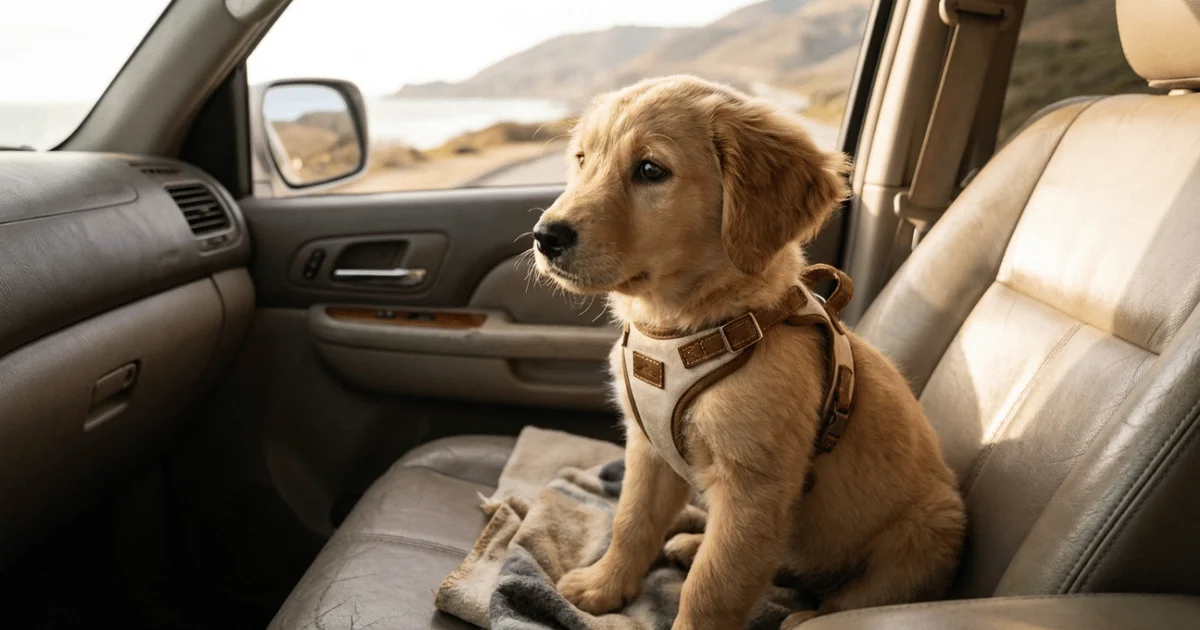
An unrestrained dog in a moving car is a genuine safety risk, both in a sudden stop and in a full accident, for the dog and for anyone else in the vehicle. A crash-tested crate secured with a seatbelt strap, or a properly fitted car harness that clips into the seatbelt system, are the two main safe options. Avoid letting a dog ride in the front seat, near an active airbag, or with its head out the window, which risks eye and ear injury from debris at speed.
Stop every two to three hours on longer drives for a bathroom break, water, and a short walk. Never leave a dog alone in a parked car, even briefly and even with windows cracked, since internal temperatures climb dangerously fast regardless of the outside weather.
Preparing for Motion Sickness
Motion sickness is more common in puppies, since the inner ear structures involved in balance are still developing, and many dogs outgrow it. Withhold food for a few hours before travel to reduce the chance of vomiting, but keep water available throughout. Keeping the car cool, well-ventilated, and the ride as smooth as possible helps too. If your dog has a known history of motion sickness, ask your vet about anti-nausea medication ahead of a long trip rather than discovering it mid-drive.
Flying with Your Dog
Small dogs that fit in an airline-approved carrier under the seat in front of you can usually travel in-cabin, which is far less stressful than cargo and the option worth prioritizing if your dog's size allows it. Larger dogs generally have to fly as cargo, and this comes with real risk from temperature extremes and handling, so choosing a direct flight to minimize time in transit and avoiding extreme weather travel days matters more in cargo than in the cabin.
Whichever option applies, let your dog get comfortable with the carrier at home first, attach clear identification with your contact details directly to the carrier, and avoid sedating a dog for air travel unless specifically directed by a vet, since sedation can interfere with a dog's ability to regulate body temperature and balance at altitude.
Packing Essentials
Bring your dog's regular food in a sealed container or individual portions, a collapsible water bowl, a leash and a backup leash, waste bags, any medication with clear dosing instructions, a familiar blanket or toy for comfort, and copies of vaccination and health records. Packing a printed copy of records, not just a phone photo, avoids a problem if your phone dies or has no signal at a checkpoint.
Managing Food and Water on the Road
Sudden changes in food or water source are one of the most common causes of stomach upset while traveling, so sticking with your dog's regular diet rather than switching to something new for the trip helps avoid an unpleasant surprise far from home. Bringing water from home, or at least giving a few days to adjust if the local water is very different, reduces the same risk. Pawby Kitchen's meals come in individual portions that travel easily and stay consistent no matter where you are, which takes one variable off the table during a trip that already has enough moving parts.
Settling In at the Destination
Once you arrive, set up a small, familiar space with your dog's own bed or blanket as quickly as possible, since a familiar scent and object goes a long way toward settling a dog into an unfamiliar place. Keep feeding times and walk times as close to the usual schedule as you can manage, even if the location has changed. Give your dog a day or two to decompress before expecting full normal behavior, especially after a long flight or drive, and keep an eye out for signs of stress in the days that follow if this is your dog's first time traveling.