Dogs are not well-designed for heat. Unlike humans, they cannot sweat across their skin. Panting is almost their only mechanism for cooling down, and it becomes less effective as air temperature and humidity rise. In tropical climates where the heat is persistent rather than seasonal, this is a year-round consideration, not just a summer problem.
Recognizing Heat Stress Before It Becomes Heatstroke
Heavy panting combined with restlessness and reluctance to move is usually the first sign. The dog is uncomfortable and trying to regulate. If this progresses to drooling, stumbling, glazed eyes, or vomiting, you are looking at heat exhaustion and need to act immediately. Heatstroke, where the body temperature exceeds roughly 40 degrees Celsius, causes organ damage and can be fatal within minutes. It is not an exaggeration.
Dogs with flat faces, thick coats, or existing health conditions are at higher risk. So are overweight dogs and very young or very old dogs. If your dog falls into any of these categories, your threshold for intervention should be lower.
If you suspect heatstroke: move the dog to shade or air conditioning immediately, wet the coat with cool (not cold) water, and get to a vet. Do not submerge in ice water as this can cause shock.
Practical Day-to-Day Cooling Strategies
Timing walks around the temperature, not around convenience, makes a significant difference. Early morning and after sunset are the only times during peak heat months where pavement is not hot enough to burn paw pads. The seven-second rule applies: if you cannot hold the back of your hand on the pavement for seven seconds, it is too hot for your dog to walk on.
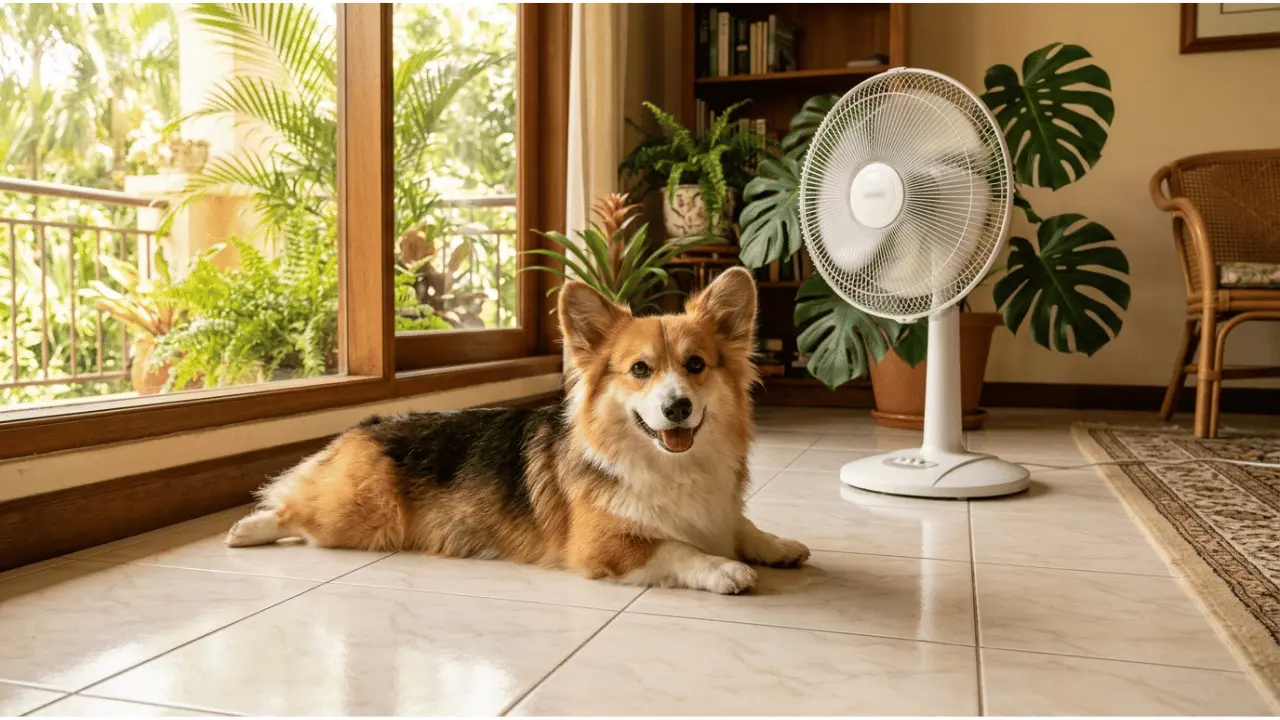
Shade and airflow matter more than air conditioning for most dogs. A dog in a shaded, well-ventilated outdoor space is often cooler than one in a still indoor space without AC. If AC is available, use it. If it is not, a fan positioned to move air across a cool tile floor works well. Dogs instinctively seek out cool tile surfaces when they are warm.
Hydration is Inseparable from Cooling
A dog that is even mildly dehydrated handles heat significantly worse than a well-hydrated dog. Multiple water sources around the home encourage more frequent drinking. Freezing a bowl of water or adding ice cubes gives your dog something to lick and helps cool them from the inside.
Food moisture is worth thinking about in this context. A dog eating dry kibble is getting almost no water from their meals and relies entirely on their bowl. Fresh food with natural broth adds meaningful hydration with every meal, which reduces heat stress particularly during peak temperature hours when dogs may drink less.
Things to Avoid
Never leave a dog in a parked car. Temperatures inside a car rise to dangerous levels within minutes even with windows cracked. Do not exercise your dog during midday heat regardless of how fit they seem. Avoid muzzling a dog in hot weather since panting is their primary cooling mechanism and restricting it is dangerous. Keep a close eye on any dog that has had heat stress before, as they are more vulnerable in future heat events.