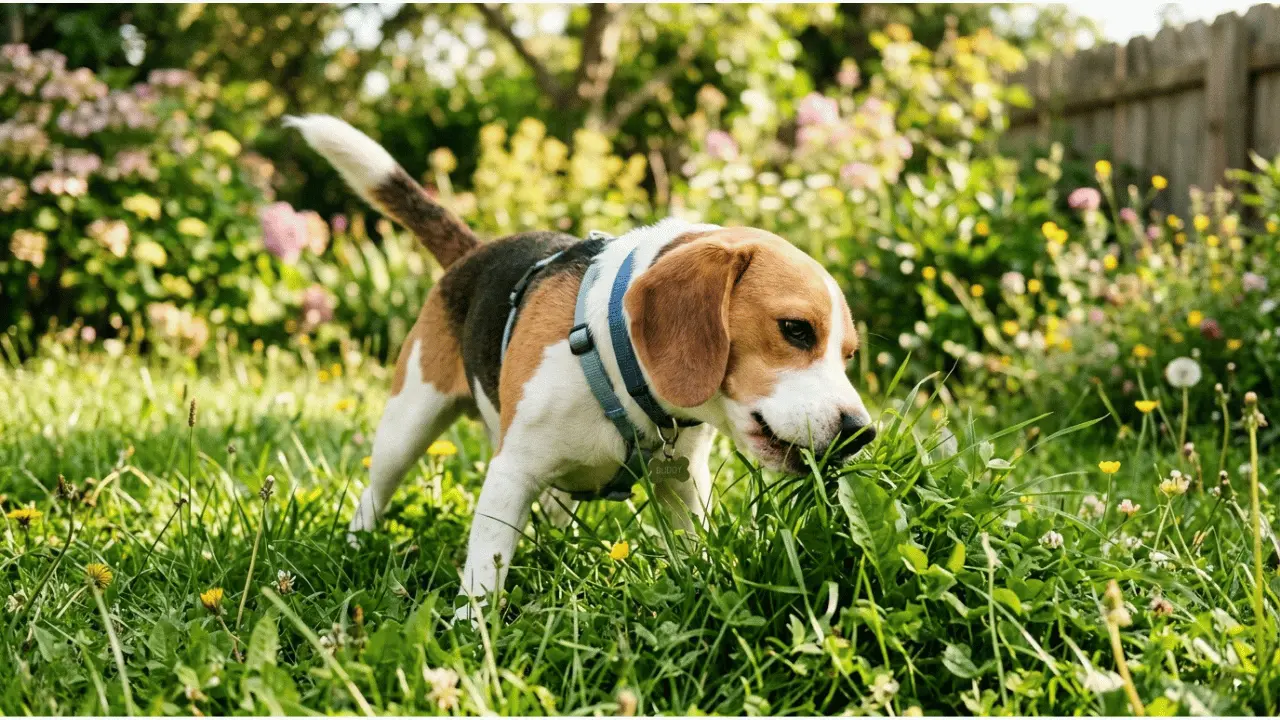
Grass eating is one of the most common behaviors that concerns dog owners, partly because it is so frequent and partly because it sometimes ends in vomiting. The good news is that in most cases it is entirely normal and not a sign of anything wrong. Understanding why it happens helps you decide when it is worth paying attention to and when you can simply watch and move on.
The Most Common Reasons
Dogs evolved as omnivores rather than strict carnivores, and plant material was part of their ancestral diet. Grass eating often appears to be a natural behavior driven by instinct rather than a specific need. Studies that have looked at this directly find that most dogs eat grass without appearing ill beforehand and do not vomit afterward. The popular theory that dogs eat grass to make themselves vomit is not well-supported by actual observation data.
Boredom and habit are also common explanations. Dogs that spend a lot of time in a garden with access to grass will often snack on it simply because it is there and they have nothing else to do. Some dogs appear to genuinely enjoy the taste or texture of young, fresh grass. This is more common in spring when grass is growing quickly and has a different flavor and moisture content.
If your dog eats grass rapidly and in large amounts and then vomits, this pattern is more likely deliberate self-induced vomiting in response to nausea. It happens occasionally and is usually harmless, but if it becomes frequent it is worth a vet conversation.
Nutritional Angle
Some research suggests dogs may seek out plant material when their diet is low in fiber. Dogs on a highly processed, low-fiber diet may graze more frequently than those eating a varied diet with adequate fiber from vegetables and whole ingredients. If your dog eats grass obsessively and frequently, adding fiber through vegetables like pumpkin or leafy greens to their diet sometimes reduces the behavior.
When Is It a Problem
The grass itself is usually fine. The risks come from what is on the grass. Pesticides, herbicides, fertilizers, and other lawn treatments can cause serious illness. If you do not know how the grass has been treated, or if you are in a public area, discourage the behavior rather than allowing it freely.
Parasites are another consideration. Grass can carry parasite eggs from other animals. Dogs that graze frequently in areas used by wildlife or other dogs may be at higher risk of picking up intestinal parasites. Keep parasite prevention current if your dog is a regular grass eater.
When to Actually Do Something
Occasional grass eating in a dog that is otherwise healthy and happy is not something that needs fixing. If the behavior is daily and compulsive, if it is always followed by vomiting, or if it seems to have started suddenly after a long period of not doing it, those patterns are worth mentioning to your vet. A sudden change in behavior in an adult dog that did not previously eat grass is more noteworthy than a dog that has always done it occasionally.