You Have a Shadow
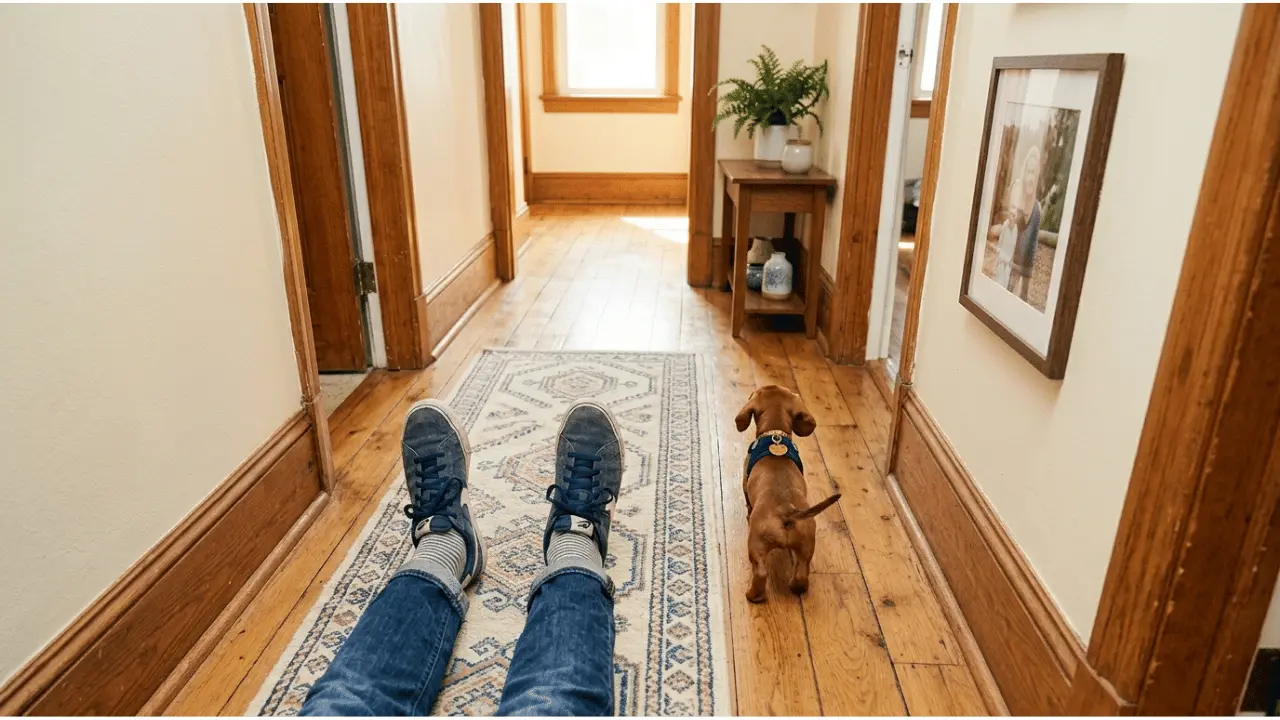
There is a golden retriever in my neighborhood that follows his owner from room to room so consistently that the owner started calling him "the shadow." Kitchen, bathroom, balcony, back again. Wherever she goes, he is three steps behind, watching her like she might disappear if he looks away for a second.
If this sounds familiar, you are definitely not alone. Following behavior is one of the most commonly asked about dog behaviors, and the reasons behind it are actually pretty interesting.
Velcro Dogs Are a Real Thing
Some breeds are just genetically wired to stay close to their humans. These are sometimes called "velcro dogs." Breeds like vizslas, border collies, Labrador retrievers, and many small companion breeds like Maltese and shih tzus were developed to work alongside or be close to people. For them, proximity to their human is almost a default setting.
If your dog is one of these breeds and follows you everywhere, it is often just breed behavior doing its thing. It is not necessarily a problem, it is just how they are built.
It Is Also About Bonding
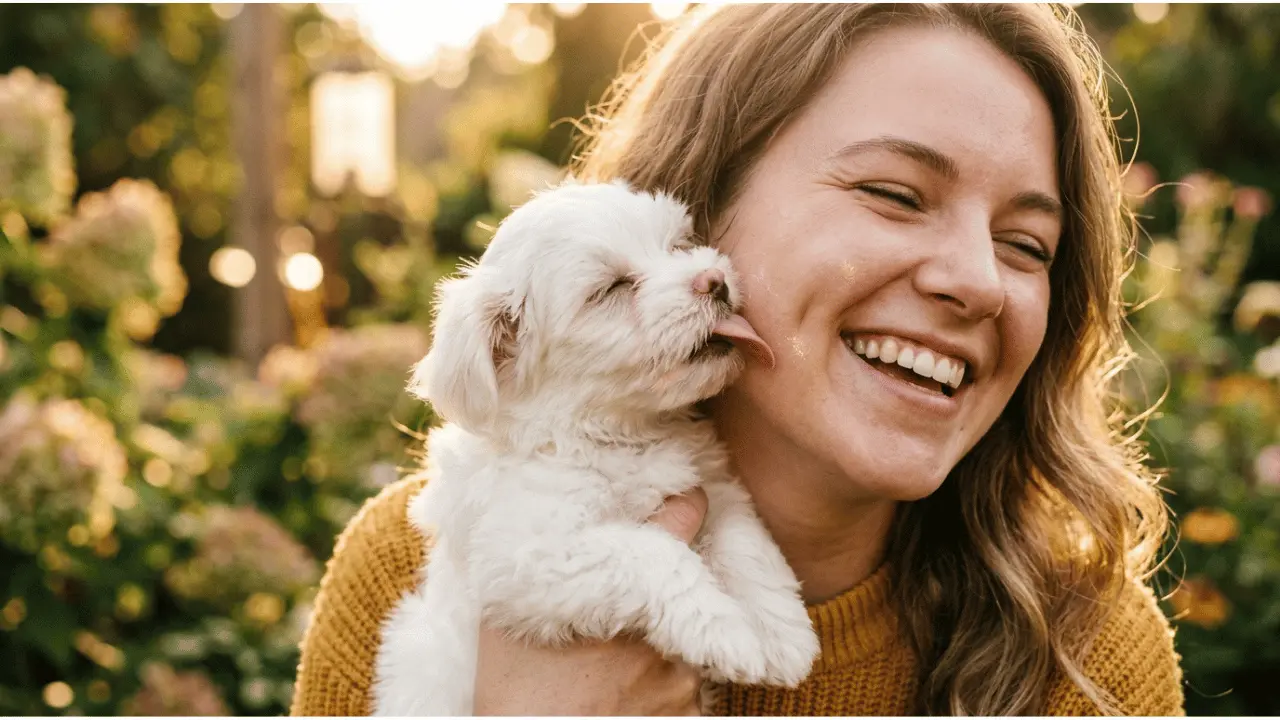
Dogs are social animals and they form genuine attachments to the people they live with. Following you around is often a simple expression of that bond. You are the source of food, safety, play, and comfort. Being near you feels good to them. The fact that they choose to follow you rather than sit alone in another room is, in many ways, a compliment.
Dogs also pick up on our routines more than we realize. They learn that when you get up from the couch and walk to the kitchen, there is a chance food might appear. When you pick up your keys, it might mean a walk. Following you is partly affection and partly very practical pattern recognition.
When Following Signals Anxiety
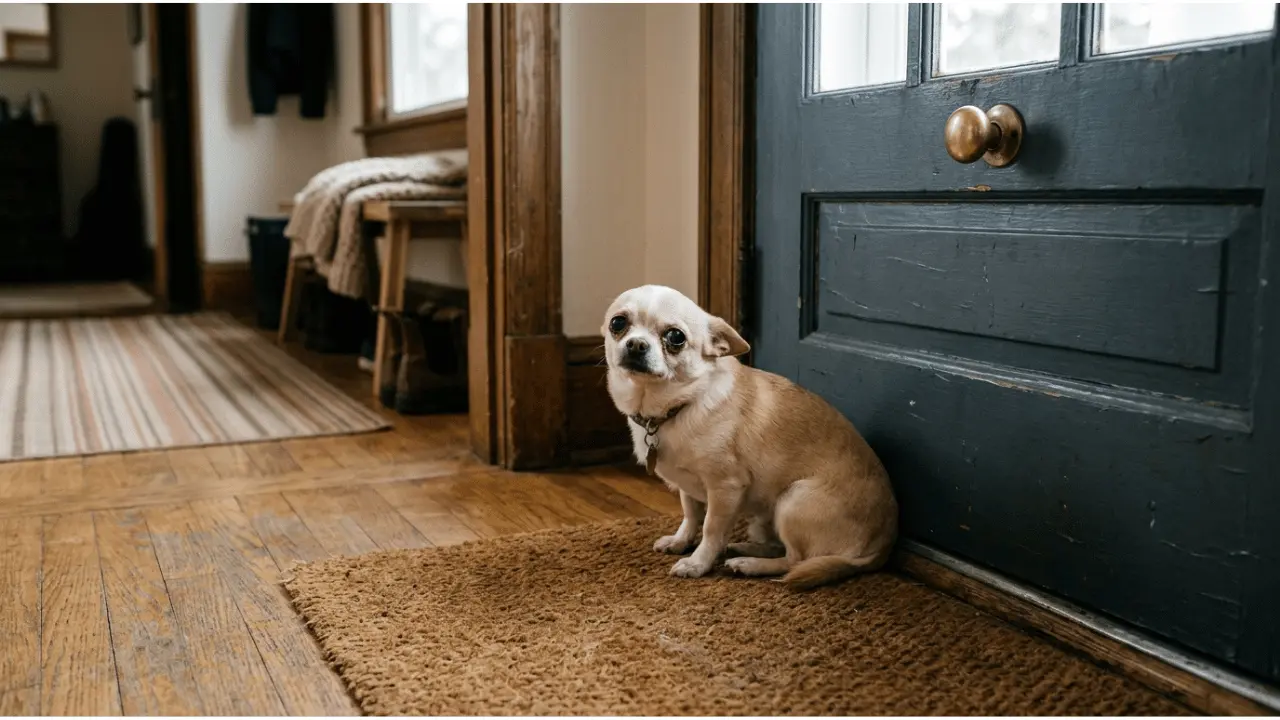
There is a difference between a dog that follows you casually and one that seems distressed when you move. If your dog pants, whines, or seems genuinely panicked when you go into another room or close a door, that is less about bonding and more about separation anxiety.
Dogs with separation anxiety often cannot settle unless they are directly next to their person. They may become destructive when left alone, bark excessively, or have accidents indoors despite being housetrained. If this sounds like your dog, it is worth addressing with training or a vet's guidance, because the anxiety itself is stressful for the dog.
A Sudden Change Worth Noting
If your dog has not always been a shadow and suddenly starts following you much more closely than usual, that can sometimes indicate they are not feeling well. Dogs that are in pain, feeling nauseous, or experiencing something physically off will sometimes seek out their person more than usual. It is their way of communicating that something is wrong.
A sudden shift in following behavior, combined with other signs like changes in appetite, energy, or demeanor, is worth a check-in with the vet just to rule anything out.