What Bone Broth Actually Is
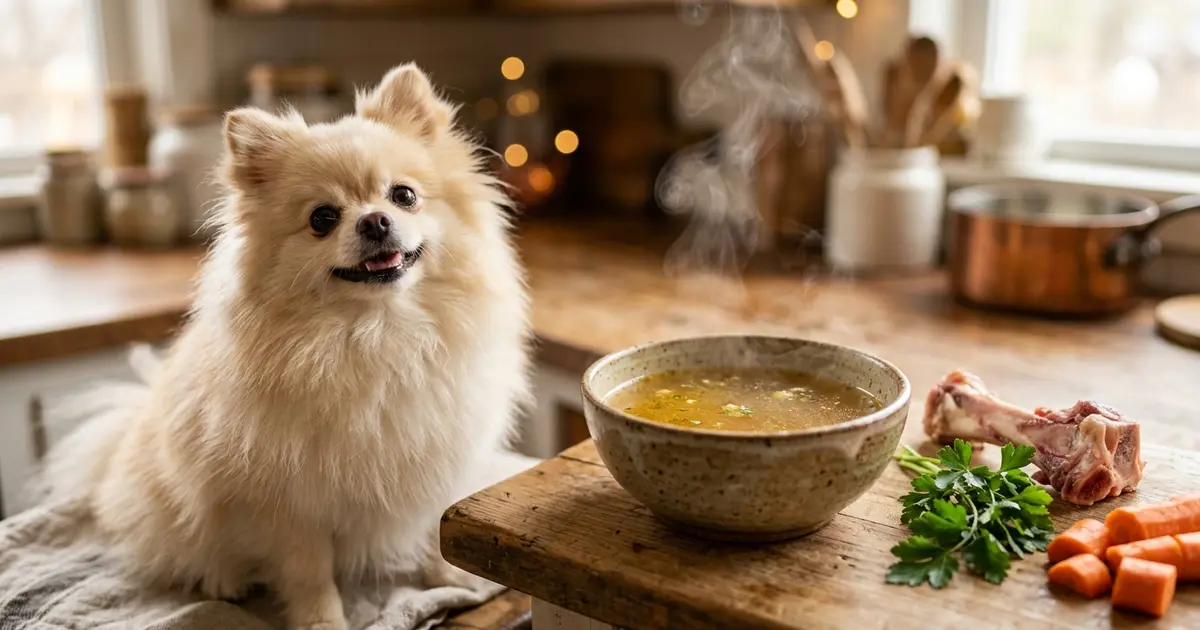
Bone broth is made by simmering animal bones in water for a long time, typically 12 to 24 hours. The slow, low-heat cooking process pulls collagen, amino acids, and minerals out of the bones and into the liquid. The result is a nutrient-dense broth with a rich, savory aroma that most dogs respond to immediately.
Unlike regular stock, which is made relatively quickly and primarily for flavor, bone broth is cooked long enough that the collagen from connective tissue and cartilage breaks down into gelatin. You know it worked when the broth sets firm and almost jelly-like after cooling in the fridge. That gelatin is where most of the benefit comes from.
What It Does for Joints
The collagen extracted during a long simmer breaks down into gelatin, which the body uses to support cartilage and connective tissue. For dogs that have started moving a little more stiffly, or for older dogs whose joints are showing their age, getting collagen through food is one of the practical things you can do nutritionally without reaching for supplements.
Bone broth also naturally contains glycosaminoglycans, including chondroitin and compounds that support joint cushioning and lubrication. These are the same compounds found in many commercial joint supplements, just in their natural food form. Whether they survive digestion in sufficient quantities to make a significant difference is debated, but for a dog who already enjoys broth, adding it costs nothing extra.
Why the Gut Benefits Are Real
Gelatin does more than support joints. It also helps maintain the integrity of the gut lining. A healthy gut lining keeps undigested particles and bacteria from crossing into the bloodstream, and gelatin supports the cells that make up that barrier. If your dog has had recurring digestive upset, or has recently been on antibiotics, bone broth is one of the gentlest things you can add during recovery.
It is also useful for dogs that are unwell and eating poorly. The broth is easy to digest, provides some nutrition, and smells appealing enough that most dogs will take it even when their appetite is reduced. For a deeper look at how gut health affects your dog beyond just digestion, our guide to gut health covers the full picture including mood, coat, and energy.
How to Serve It
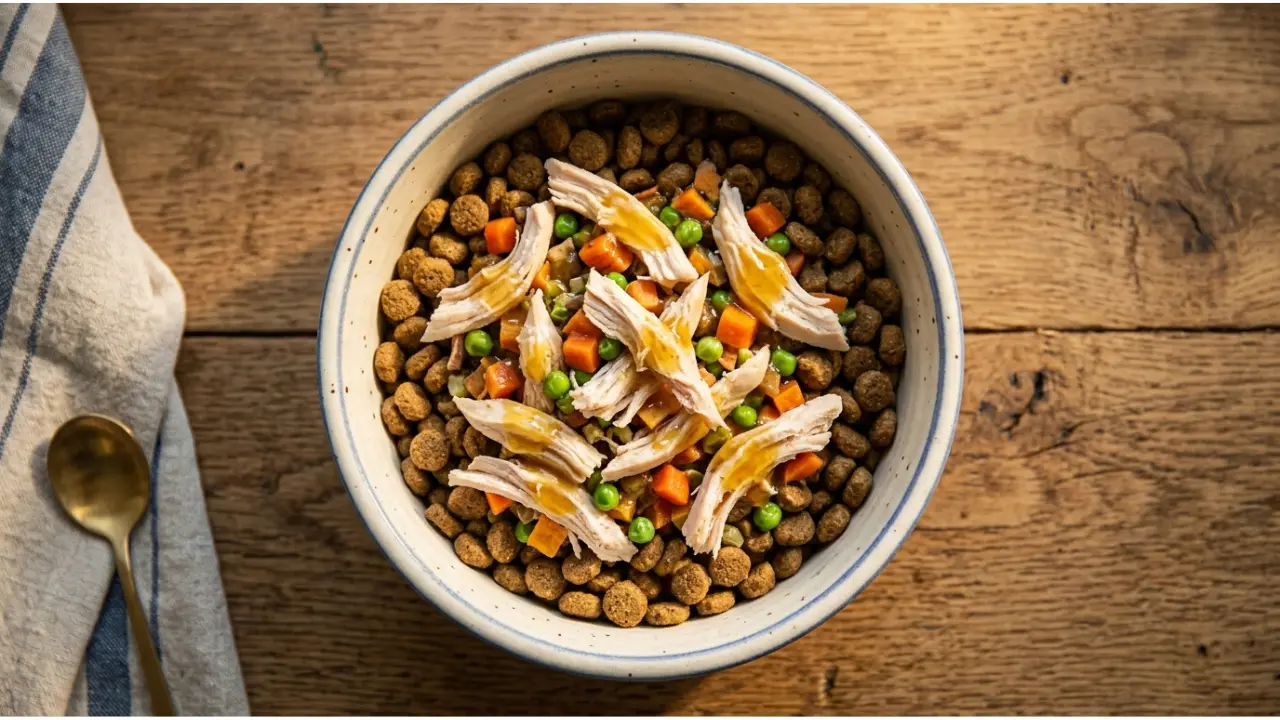
Poured over food is the most common use. Two to four tablespoons drizzled over the regular meal softens kibble slightly, releases aroma, and gets most dogs genuinely excited about what is in the bowl. Dogs that normally circle their bowl and walk away tend to eat with noticeably more enthusiasm once broth is added.
Served alongside the meal in a small bowl works well for dogs that are unwell or eating below their normal amount. The broth gives them something to drink with some nutritional value while the appetite recovers.
Frozen in ice cube trays is a practical option for hot weather. A frozen broth cube is a simple enrichment treat that most dogs enjoy working at and helps with hydration at the same time. Two to four tablespoons per meal is a reasonable serving for small and medium dogs. Large breeds can have up to half a cup. Bone broth is a supplement to the diet, not a replacement for water.
Making It at Home
It is straightforward to make at home. Start with raw or lightly roasted bones: chicken carcasses, beef marrow bones, or pork knuckles all work well. Place them in a large pot or slow cooker, cover with cold water, and add a tablespoon of apple cider vinegar. The vinegar helps draw minerals out of the bones during the long cook.
Simmer on very low heat for 12 to 24 hours. Remove the bones carefully and discard them. Cooked bones splinter and should never be given to a dog directly. Strain the liquid, let it cool, then skim the fat layer off the top before storing. Too much fat in one sitting can cause digestive upset, especially for dogs prone to pancreatitis. Store in the fridge for up to five days or freeze in portions for up to three months.
What to Watch Out For
The most important thing has already been mentioned: no onion, no garlic. Both are toxic to dogs, and a lot of broth made for human consumption includes one or both. If you are buying commercial bone broth rather than making your own, read the ingredient list carefully and look for a product labeled specifically for dogs, or one with no onion, no garlic, and no added salt in the ingredients.
Excess fat is the other thing to watch. Skimming the fat layer after the broth has cooled reduces the risk of digestive upset. For dogs with a history of pancreatitis, keep servings small and stick to lower-fat bones like chicken rather than beef marrow. And a reminder that is worth repeating: the cooked bones themselves never go to the dog. Only the liquid.
If you would rather skip the long simmer and still get the benefit, Pawby Kitchen includes bone broth in some of our fresh meal options. It is already made the right way, with nothing added that should not be there.