What Is a Dog Food Topper?
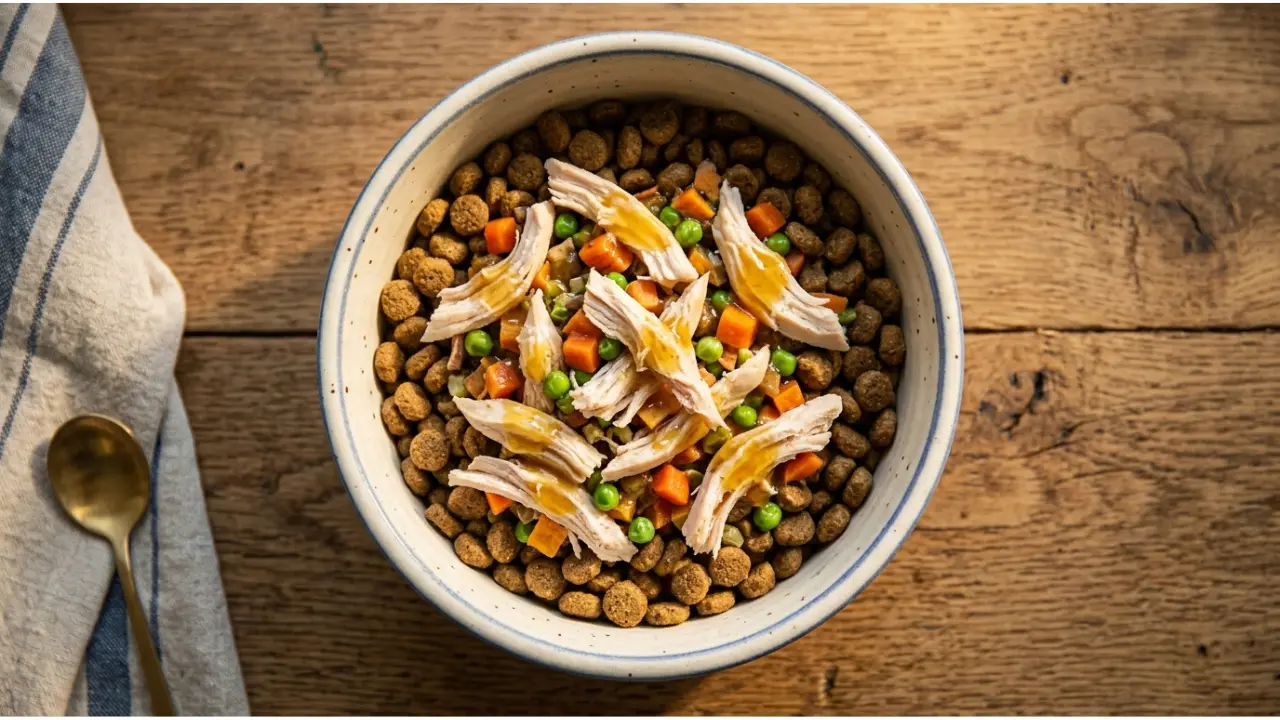
A food topper is anything you add on top of your dog's regular meal to make it more appealing, more nutritious, or both. It could be a spoonful of cooked chicken, a drizzle of bone broth, a scrambled egg, some plain pumpkin puree, or a small piece of sardine. It could also be a commercial product sold specifically as a topper. The concept is simple: the base meal stays the same, but you add something on top that makes the whole bowl more interesting for your dog.
Toppers became popular because a lot of dogs on dry kibble eat without much enthusiasm, and owners started noticing that adding even a small amount of real food transformed mealtime. The dog who would circle the bowl and walk away would suddenly eat with actual excitement. Once people saw that, they started doing it regularly and paying attention to what actually helped.
Why Use Toppers?
The most common reason is palatability. Kibble smells like kibble, and after eating the same thing twice a day for months or years, some dogs lose interest. A topper with a strong, fresh aroma changes the whole experience of the meal. For picky eaters, this alone can make a real difference in whether the dog finishes their food.
The second reason is nutrition. Dry kibble, even a good one, is a heavily processed food. Adding whole food on top gives your dog some nutrients in their natural form rather than the synthetic versions added back after the extrusion process. Over time, that adds up. A dog who eats kibble plus regular fresh toppers is getting better nutritional variety than one eating kibble alone.
Toppers are also a useful middle ground for owners who want to feed more fresh food but cannot commit to full homemade meals yet. Even one fresh topper per day is a meaningful improvement on a kibble-only diet.
What Actually Works Well as a Topper
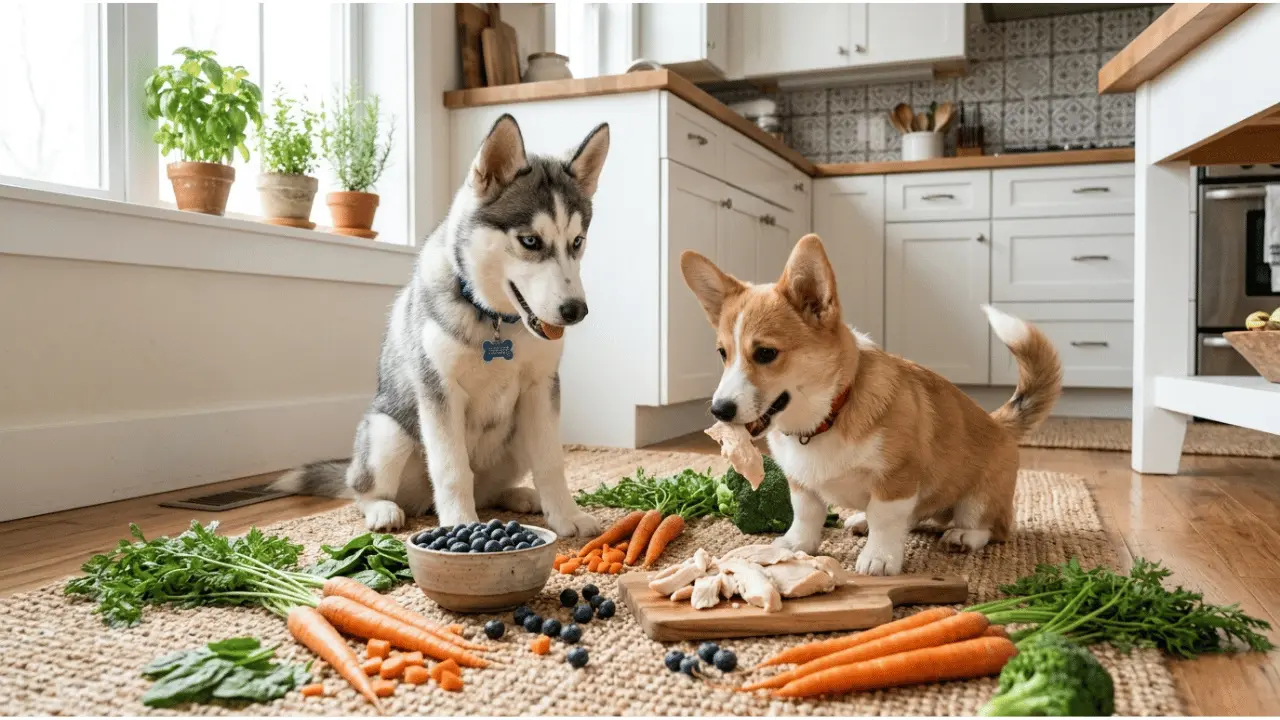
Cooked meat is the most straightforward option. Plain boiled or baked chicken, beef, or fish with no seasoning, no onion, no garlic. Just the meat. Chop it into small pieces and mix it through the kibble or lay it on top. Most dogs will eat around it anyway.
Bone broth is one of the most popular toppers right now, and for good reason. A few tablespoons poured over kibble softens it slightly, adds moisture, and the aroma is irresistible to most dogs. It also contains collagen, glycine, and minerals that support joint health, gut lining, and digestion. Make sure you are using broth made without onion, garlic, or added salt.
Eggs are easy, affordable, and nutritious. A scrambled egg, a poached egg, or even a raw egg stirred through the food adds protein, healthy fats, and B vitamins. Most dogs love them. Eggs are one of the most complete single-ingredient toppers you can use.
Plain pumpkin puree (not pumpkin pie filling, which contains sugar and spices) adds fiber that supports healthy digestion. It is particularly useful for dogs that have soft stools or irregular digestion. One to two tablespoons per meal is enough.
Sardines in water are an excellent source of omega-3 fatty acids, which support coat quality, skin health, and inflammation. One small sardine a few times a week is plenty. Avoid sardines packed in oil or with added salt.
Plain unsweetened yogurt or kefir in small amounts adds probiotics that support gut bacteria. A tablespoon per meal is enough. Not every dog tolerates dairy well, so watch for any digestive changes when you first introduce it.
Which Dogs Benefit Most
Picky eaters are the most obvious candidates, but toppers help a range of dogs. Senior dogs who have lost some appetite or interest in food often eat much better when their meal has a fresh element. Dogs recovering from illness or with reduced appetite due to stress or medication tend to respond well to strong-smelling toppers like broth or fish.
Dogs with dry or dull coats benefit from omega-3-rich toppers like sardines or salmon. Dogs with recurring loose stools or sensitive digestion often do better with the added fiber from pumpkin or the probiotic support from yogurt. And dogs on a weight management plan can get lower-calorie toppers like steamed vegetables or broth to make the reduced-portion meal feel more satisfying.
Mind the Calories
Toppers add calories to your dog's diet, and this matters more than people often realize. If you are adding a full tablespoon of meat and a drizzle of broth and a spoonful of yogurt every meal, that adds up. For a small or medium dog, it can push daily intake meaningfully over maintenance needs without you noticing it on the scale for a few months.
The simple fix is to reduce the kibble portion slightly when you add a topper, so the total meal stays roughly the same caloric value. A rough guideline: if the topper makes up about 10 percent of the bowl, reduce the kibble by about 10 percent. Checking your dog's body condition every few weeks will tell you quickly if portions are drifting.
What Not to Use as a Topper
Anything seasoned with onion, garlic, or salt is off the list entirely. Leftovers from human cooking almost always contain one or more of these, so avoid sharing your dinner directly. Processed meats like ham, sausage, and deli slices are high in sodium and often contain preservatives that are not good for dogs.
Dairy in large amounts can cause digestive upset in dogs that are lactose intolerant. A spoonful of yogurt is usually fine, but a big serving of cheese or milk is not. Grapes and raisins are highly toxic and should never be added to a dog's food in any amount. When in doubt, check whether an ingredient is safe before using it.