It Is About More Than Digestion
Most people think of gut health as just whether their dog has normal stools. But the digestive system does a lot more than process food. It is home to trillions of bacteria that affect how nutrients get absorbed, how the immune system responds, and even how the brain functions. Scientists sometimes call the gut the "second brain," and that holds true for dogs too.
When a dog's gut microbiome is balanced, everything tends to run more smoothly. When it is out of balance, the effects show up in places that seem completely unrelated: a dull coat, low energy, anxious behavior, loose stools that come and go, skin that stays irritated no matter what you put on it. A lot of health issues that seem separate are actually connected back to what is happening in the gut.
Signs Your Dog's Gut Might Be Off
Loose stools more than once or twice a week is the most obvious sign, but it is far from the only one. Dogs with imbalanced gut bacteria often have noticeable gas, bloating, and stools that vary a lot in consistency from day to day. Some dogs eat grass frequently, which is sometimes a sign of digestive discomfort rather than just a quirk.
Outside the digestive system, look at the coat. A rough, dull, or flaky coat when your dog is otherwise healthy is often a nutrient absorption issue, and poor gut health is one of the main reasons nutrients do not get absorbed properly even when the food itself is fine. Recurring skin problems without a clear cause can also trace back to gut imbalance, since about 70 percent of a dog's immune system lives in the digestive tract.
On the behavioral side, dogs with chronic digestive discomfort often seem more irritable, restless, or anxious than usual. They may be less interested in play, eat inconsistently, or seem generally flat in a way that is hard to pin down.
The Gut-Coat Connection
Coat quality is one of the clearest visible signs of gut health. The skin and coat need omega-3 fatty acids, zinc, biotin, and several other nutrients to stay healthy. If the gut is not absorbing these properly, it does not matter how good the food is on paper. The nutrients pass through without doing their job.
This is one reason why some dogs on premium kibble still have dull coats and dry skin. The ingredients might be listed, but if absorption is poor, the dog is not actually getting the benefit. When gut health improves, nutrient absorption improves, and coat quality often follows within a few weeks.
The Gut-Mood Connection
The gut and the brain communicate through what is called the gut-brain axis, a network of nerves and chemical signals that run in both directions. In dogs, this means that what happens in the digestive tract genuinely influences behavior and emotional state. A dog with chronic gut discomfort is not going to feel great, and it shows.
Research in both humans and animals has found links between gut bacteria composition and anxiety, stress responses, and mood regulation. Dogs with healthier, more diverse gut microbiomes tend to be calmer and more resilient to stress. Dogs with disrupted gut bacteria show higher rates of anxious and reactive behavior. This does not mean every anxious dog has a gut problem, but it is a connection worth understanding.
What Disrupts Gut Health
Antibiotics are one of the biggest disruptors. They are necessary when dogs have bacterial infections, but they wipe out beneficial bacteria alongside harmful ones. After a course of antibiotics, rebuilding the gut microbiome takes time and intentional support.
Diet plays a massive role too. Highly processed food with lots of fillers, artificial additives, and low-quality ingredients tends to support a less diverse microbiome. Frequent food switches without a proper transition period can also disrupt gut bacteria. Stress, whether from changes in environment, routine, or chronic anxiety, affects gut function as well, creating a feedback loop where gut problems worsen mood and mood worsens gut function.
How to Support Your Dog's Gut
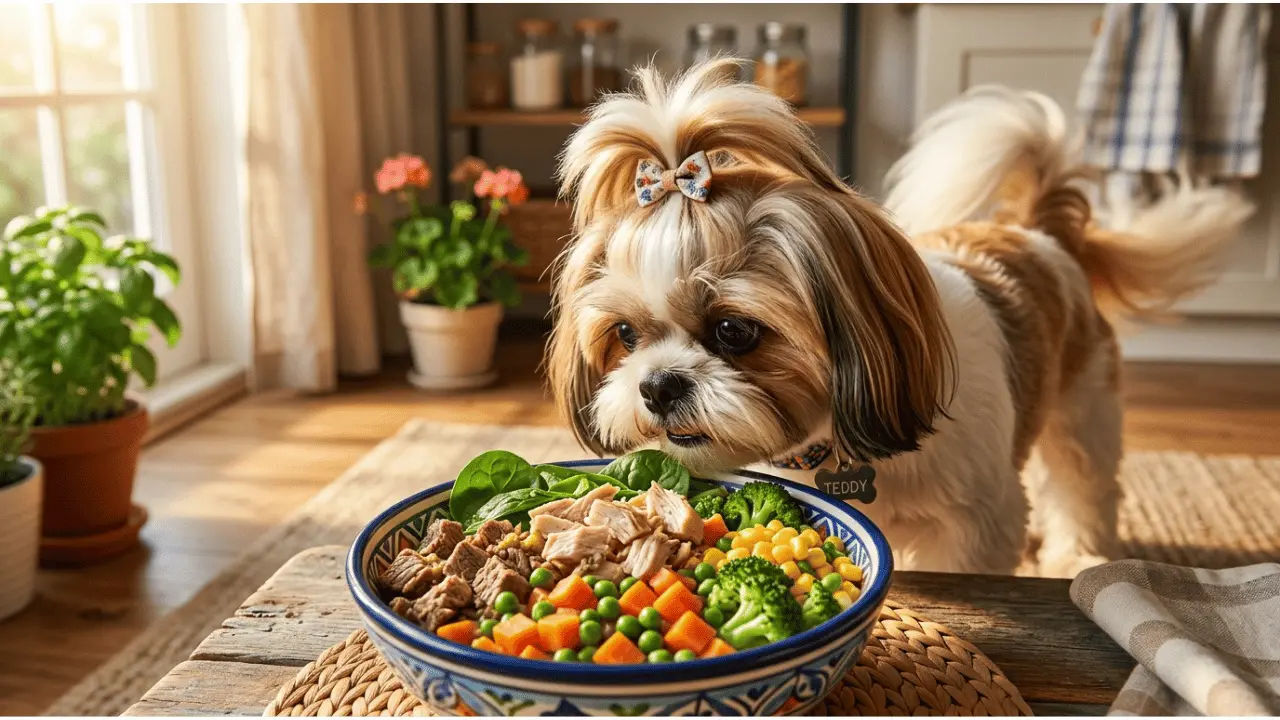
Diet is the most powerful tool available. Fresh food made from whole ingredients provides more bioavailable nutrients than heavily processed alternatives and tends to support better gut bacteria diversity. Fiber from vegetables like pumpkin, sweet potato, and leafy greens acts as a prebiotic, feeding the beneficial bacteria in the gut.
Probiotics can help, especially after illness, stress, or antibiotics. Look for dog-specific probiotic supplements with multiple strains, or add small amounts of plain unsweetened yogurt or kefir if your dog tolerates dairy. Fermented foods like a small spoonful of fermented vegetables can also help, though not all dogs take to the taste.
Keeping a consistent diet matters more than most people realize. Dogs thrive on routine, and the gut bacteria adapt to the food the dog regularly eats. Switching proteins or food types too frequently without a slow transition can cause repeated disruption. When you do need to switch, do it gradually over seven to ten days, blending the new food in slowly.
Why Fresh Food Makes a Difference
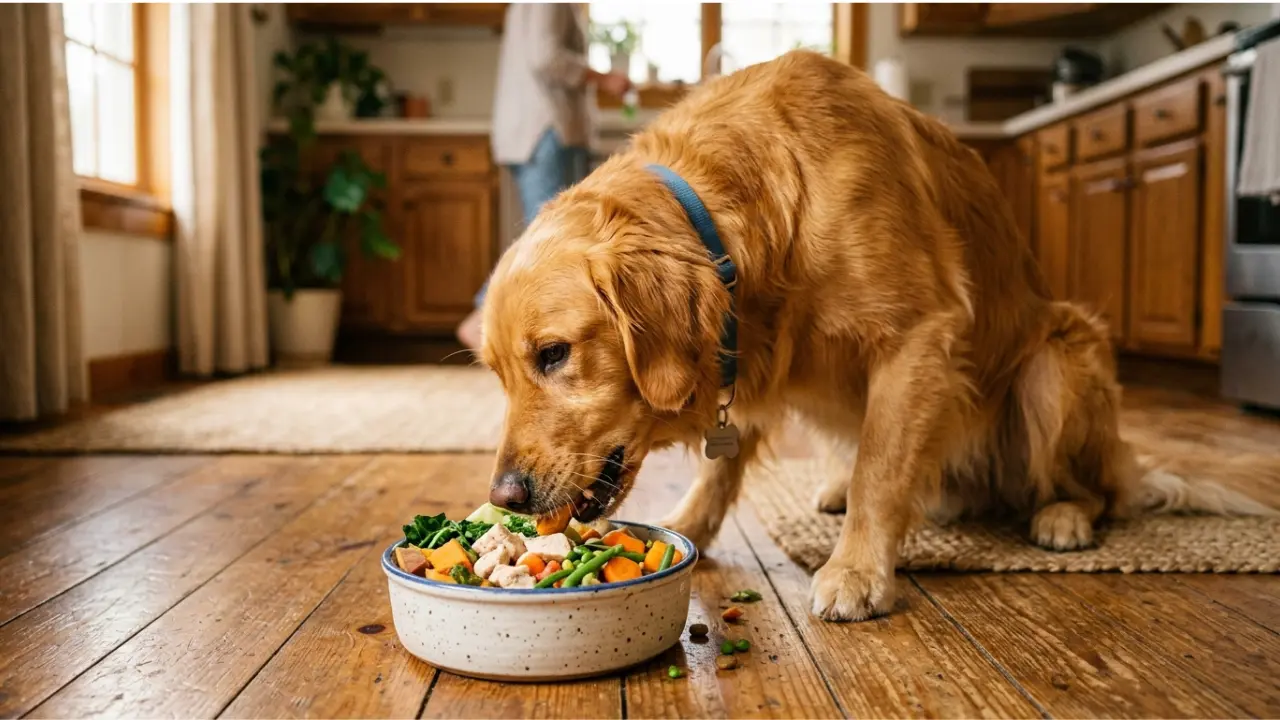
Fresh cooked food tends to be easier for dogs to digest than kibble. The ingredients are closer to their natural form, moisture content is higher, and there are no preservatives or artificial additives that can irritate the gut lining. Dogs on fresh food typically have smaller, firmer stools, less gas, and better overall digestion within the first few weeks of switching.
The real benefit shows up over time. Consistent fresh food with a variety of proteins, vegetables, and healthy fats builds a more diverse and resilient gut microbiome. And that diversity is what drives the improvements people notice in coat quality, energy, and mood. It is not magic. It is just what happens when the gut gets what it needs consistently.