You Cannot Stop It, But You Can Manage It
Every dog sheds. Even breeds marketed as non-shedding still lose some hair. Shedding is a normal biological process where old or damaged hair falls out to make way for new growth, and no grooming routine, supplement, or shampoo is going to stop it entirely. What you can control is how much loose hair ends up on your sofa versus getting removed before it gets there.
The good news is that most of the strategies that reduce shedding are also just good care. Regular brushing, a decent diet, appropriate bathing, and paying attention to your dog's skin health all make a meaningful difference to how much fur you are picking off the furniture every week.
Why Some Dogs Shed More Than Others
Breed is the biggest factor. Double-coated breeds like Huskies, Golden Retrievers, German Shepherds, and Corgis shed significantly more than single-coated or short-haired breeds. Double-coated dogs go through seasonal blowouts, usually twice a year, where they shed their undercoat in large volumes over a few weeks. During these periods, shedding that would normally seem excessive is perfectly normal.
Age, hormones, and health status also affect shedding. Unspayed females shed more heavily around heat cycles. Dogs who are stressed, unwell, or nutritionally deficient tend to shed more than healthy dogs of the same breed. A dog suddenly shedding noticeably more than usual when nothing seasonal explains it is worth looking into.
Brushing: The Single Biggest Thing You Can Do
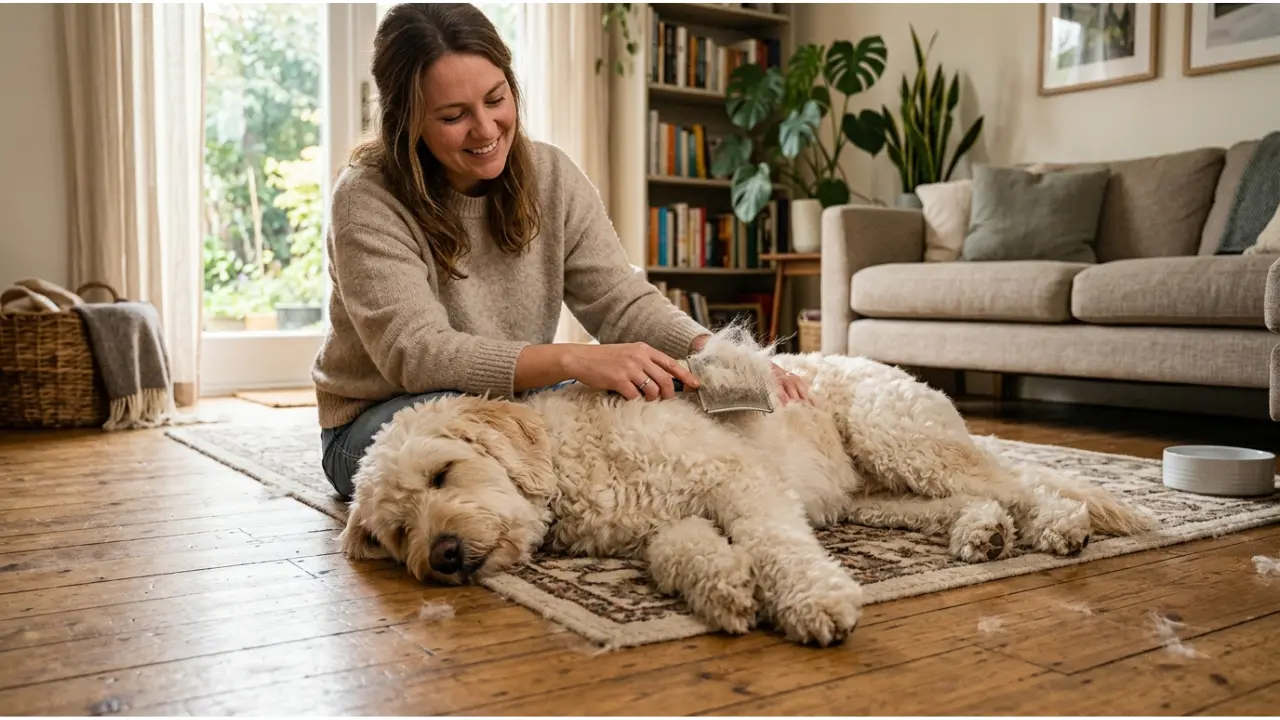
Brushing removes dead and loose hair before it falls on your floors and furniture. That is really the whole principle. Hair that comes out on the brush does not come out on the couch. The more consistently you brush, the less shed hair accumulates in your home.
Frequency matters more than duration. A quick five-minute brush three or four times a week does more than one long session once a fortnight. For heavy shedders, daily brushing during seasonal blowouts is genuinely necessary if you want to keep on top of it.
Tool choice depends on coat type. A slicker brush works well for most coat lengths and types. An undercoat rake or deshedding tool like a Furminator is specifically designed for double-coated breeds and gets into the undercoat where most of the loose hair accumulates. Using a deshedding tool on a single-coated dog can damage the coat, so know what kind of coat your dog has before buying tools.
Diet Makes a Bigger Difference Than Most People Expect
A dog with poor skin and coat health sheds more than a healthy dog of the same breed. And a significant part of skin and coat health comes down to what the dog is eating. Dogs need adequate omega-3 fatty acids, zinc, biotin, and high-quality protein for healthy hair growth and follicle strength. When any of these are lacking, the hair that grows is weaker and sheds more easily.
Omega-3s are particularly important. Adding sardines in water, a small amount of salmon, or a fish oil supplement a few times a week can noticeably reduce shedding over six to eight weeks. The improvement is not instant because hair growth cycles are slow, but it is real. Many owners who switch from kibble to fresh food report a visible reduction in shedding within a couple of months, along with a shinier, softer coat overall.
Make sure your dog is drinking enough water too. Dehydration dries out the skin, which weakens hair follicles and increases shedding. Dogs on dry kibble often do not drink enough to compensate for the low moisture content of their food, which contributes to chronic mild dehydration that affects coat quality over time.
Bathing and the Right Shampoo
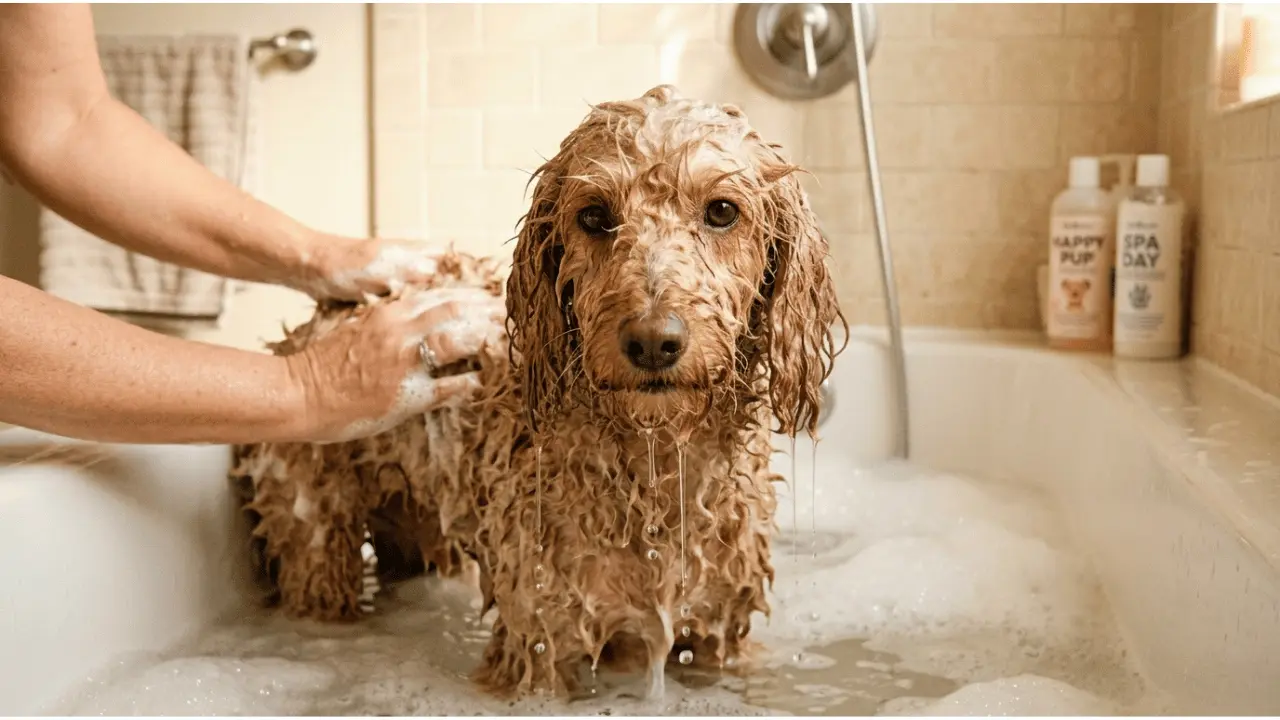
A proper bath loosens and removes dead undercoat that brushing alone does not always reach. Bathing during a seasonal blowout and then brushing thoroughly while the coat is drying or just after can remove an enormous amount of loose hair in one session. Some groomers offer deshedding baths specifically for heavy-shedding breeds, using high-velocity dryers to blast loose undercoat out of the coat before it sheds naturally.
Shampoo choice matters for coat health but does not directly stop shedding. Use a gentle dog shampoo without harsh sulfates that strips the coat's natural oils. Overbathing dries out the skin and can actually increase shedding, so bathing frequency should be appropriate for the coat type, not more than needed.
Managing the Hair That Still Gets Through
Even with good brushing and a healthy diet, some hair is going to end up around the house. A few practical habits help keep it manageable. A rubber bristle brush or damp rubber glove picks up dog hair from fabric surfaces far more effectively than a lint roller. Running a slightly damp cloth over hard floors and furniture collects hair rather than pushing it around.
Washable covers on sofas and dog beds that get laundered regularly are a practical investment for heavy-shedding breeds. A good vacuum with strong suction and a filter that traps pet hair is worth the cost if you share your home with a dog that sheds heavily. Vacuuming more frequently during seasonal blowout periods, rather than waiting until hair builds up, is far less work overall.
When Shedding Becomes a Health Signal
Shedding that is sudden, patchy, or accompanied by other symptoms is worth a vet visit. Hair loss in specific areas, thinning coat, bald patches, flaky or irritated skin underneath, or shedding that is noticeably heavier than the dog's normal pattern can point to skin conditions, thyroid issues, hormonal imbalances, parasites, or nutritional deficiencies. These need a diagnosis rather than just more brushing.
A healthy dog shedding normally has an even coat with no bald patches, healthy skin underneath, and shedding that follows a predictable seasonal pattern. If that description does not match what you are seeing, it is worth getting it checked rather than assuming it is just seasonal.