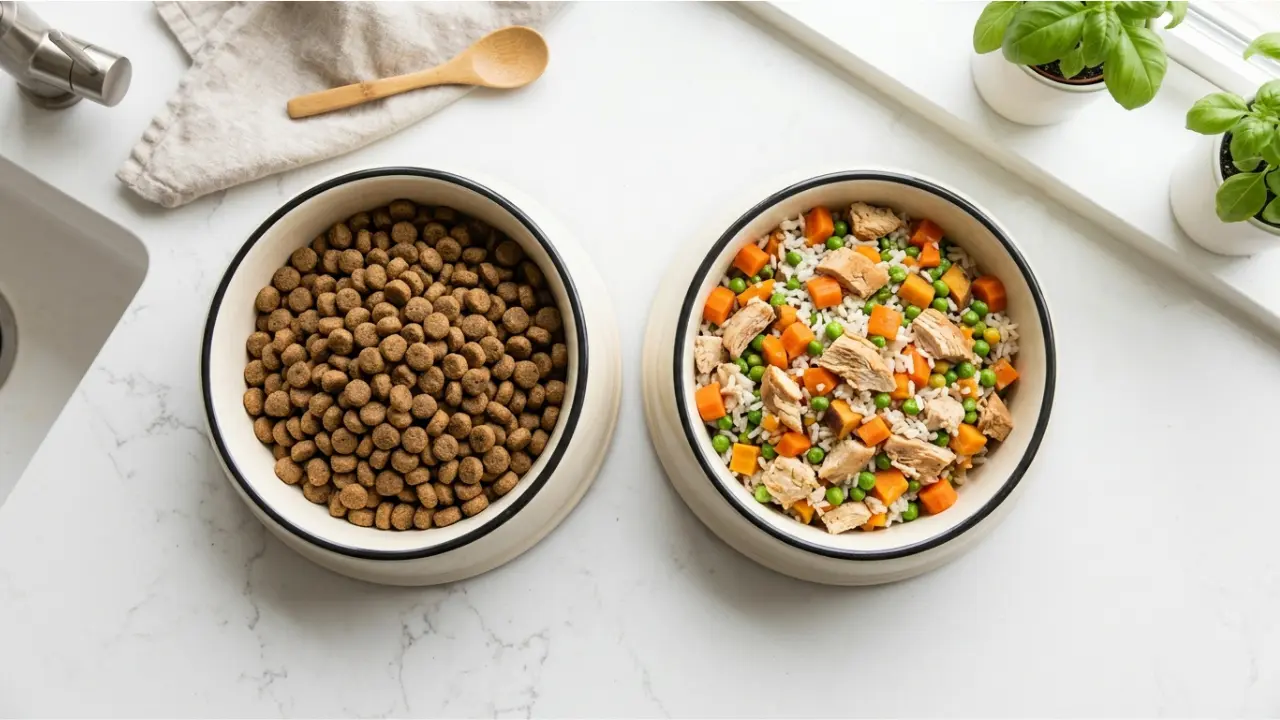
What "Human-Grade" Actually Means
The term gets used a lot in dog food marketing, but it has a specific legal meaning. "Human-grade" means that every ingredient in the product meets the standards required for human food, and the facility where it is produced meets human food manufacturing standards too. Not just that the ingredients are decent quality. Both the sourcing and the production process have to qualify.
Most commercial dog food, including many premium brands, uses what is classified as "feed-grade" ingredients. These are legal for animal food but would not pass inspection for human consumption. The difference is not just about freshness. It is about where the ingredients come from, what they contain, and how they are handled throughout the supply chain.
How It Differs from Feed-Grade
Feed-grade ingredients can legally come from animals that were condemned for human use, meaning the animal did not meet the health and safety standards required for slaughter intended for human consumption. They can also include parts and by-products that are technically derived from food animals but would never appear in a kitchen. This is not automatically dangerous in small quantities, but quality and consistency vary far more than in the human food supply chain.
Human-grade dog food uses the same chicken breast, the same sweet potato, the same piece of fish that would go into food for people. That means stricter sourcing, stricter handling, and stricter facility standards at every stage. The ingredient list on a human-grade food usually says "chicken" or "beef." A feed-grade food might say "chicken meal," "poultry by-product meal," or "animal digest." These are processed and rendered ingredients from lower-quality sources, and what goes into them varies batch to batch.
What the Ingredients Actually Look Like
In a human-grade dog food, the chicken in the recipe is muscle meat from a facility inspected for human food production. In a feed-grade food, the "chicken" might include mechanically separated meat, rendered by-products, or material from older processing streams. The label on a feed-grade product will often use broad categories that tell you very little about what is actually inside.
This matters because protein quality affects how much your dog actually benefits from what they eat. Muscle meat from a human-grade source has a different amino acid profile and digestibility than dried, rendered by-product meal, even if both count as protein on the nutrition panel. Two foods with the same protein percentage on the label can deliver very different amounts of usable nutrition depending on where that protein comes from.
Is It Actually More Nutritious?
Generally yes, though not because of any one magic ingredient. Human-grade ingredients tend to be more digestible because they are higher quality protein sources with fewer fillers and processing aids. When a dog's digestive system can actually absorb what is in the food, they get more nutritional value per gram than they would from a lower-quality source that passes through without being fully used.
The gut health benefits are real too. Fresh, whole ingredients support better gut bacteria diversity than heavily processed alternatives. Dogs on higher-quality food tend to produce smaller, firmer stools, which is a sign that more of the food is being absorbed rather than passing through unused. Over time, this shows up in better coat condition, more stable energy, and more consistent digestion.
The Cost Question
Human-grade dog food costs more. That is just the reality of sourcing better ingredients and meeting stricter handling standards. But the comparison is not always as simple as looking at the price per kilogram. Dogs eating higher-digestibility food often need to eat less volume to meet their nutritional needs. A smaller portion that is well absorbed can be more efficient than a larger portion that passes through with much of the nutrition unused.
The cost gap also depends on what you are comparing it to. Premium kibble is already priced higher than basic brands, so the jump to human-grade fresh food is smaller from that starting point than it might seem. For many pawrents, the practical question is not whether the food is better, but whether the difference it makes is worth it for their specific dog.
Which Dogs Benefit Most
Any dog can benefit from higher quality ingredients, but the difference is most noticeable in dogs who are already having issues on their current diet. Dogs with recurring skin or digestive problems that have not responded to switching between different kibble brands often improve when the ingredient quality itself goes up. Dogs with dull coats, inconsistent stools, or low energy that does not match their age or activity level are good candidates too.
For healthy dogs eating good quality food with no complaints, the shift may be less dramatic but still real over time. Better ingredients mean less strain on the digestive system and more complete nutrition at every meal. For pawrents who want that without the daily effort of cooking from scratch at home, services like Pawby Kitchen cook with real, whole ingredients and deliver fresh. Same idea, without the chopping board.