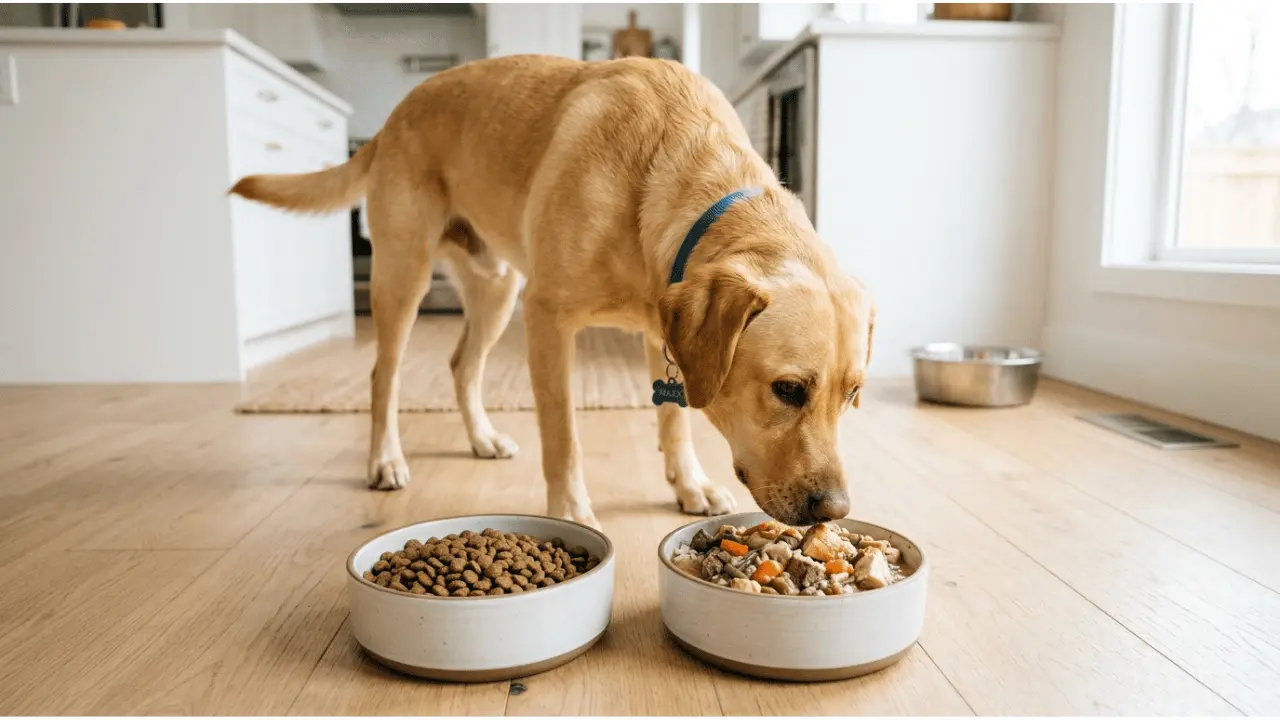
The Honest Answer
Kibble has been the default for decades, and a lot of dogs live long, healthy lives on it. So the answer is not simply "fresh food is always better." But fresh food does have real advantages that are worth understanding, especially if your dog has skin issues, low energy, inconsistent digestion, or is just not thriving the way you would hope.
The more useful question is not which one wins in theory, but which one is actually working for your specific dog. This guide lays out what is different between them so you can make that call clearly.
What Kibble Actually Is
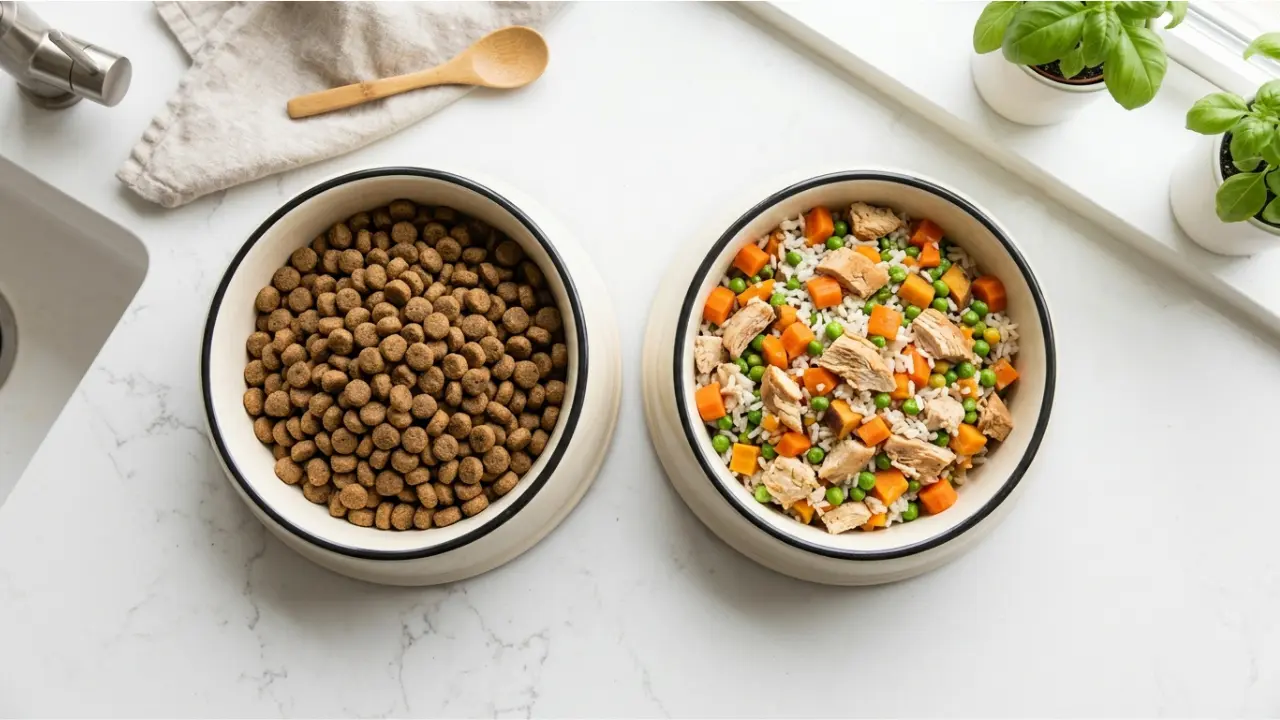
Dry dog food goes through a manufacturing process called extrusion, where ingredients are ground, mixed, cooked at very high temperatures, and then pushed through a machine that shapes them into pellets. The heat involved destroys a significant amount of the naturally occurring vitamins and enzymes in the original ingredients, which is why commercial pet food manufacturers add synthetic vitamins back in after processing.
The ingredient list on kibble bags can look impressive, but what you see listed does not always reflect what ends up in the final product. Ingredient quality varies enormously between brands and sometimes between batches. Terms like "meat meal," "animal by-products," and "animal digest" on the label refer to processed animal parts of variable quality, and they are legal to use regardless of the specific source.
That said, not all kibble is the same. Some brands use higher-quality ingredients and less filler. The wide range in price between the cheapest and most expensive kibble exists for a reason. But even premium kibble is still a heavily processed food with synthetic nutrient supplementation, and some dogs simply do not do as well on it as others.
What Fresh Food Actually Is
Fresh dog food is made from whole ingredients cooked at lower temperatures, without the extrusion process that breaks down nutrients. It typically contains real meat, vegetables, and carbohydrates you can recognize by sight. No synthetic binders, no artificial preservatives, no ingredients listed under broad category names that obscure what they actually are.
Because the cooking process is gentler, more of the natural nutrients in the ingredients survive into the finished meal. The food is easier for most dogs to digest, which means they absorb more of what they eat. This is why dogs on fresh food often have noticeably smaller stools, even when eating the same caloric amount as they did on kibble. Less waste means better absorption.
Fresh food also requires some planning. It needs refrigeration or freezing, and it costs more per meal than most kibble options. For some families that is the main barrier, and that is a completely fair consideration.
The Key Differences Side by Side
| Factor | Kibble | Fresh Food |
|---|---|---|
| Ingredient quality | Varies widely by brand | Whole, recognizable ingredients |
| Moisture content | ~8-10% | ~70-75% |
| Processing level | High heat extrusion | Gentle cooking |
| Nutrient source | Mostly synthetic add-backs | Naturally occurring in food |
| Digestibility | Moderate | Generally higher |
| Convenience | High (shelf stable) | Requires fridge or freezer |
| Cost | Lower to moderate | Higher |
What Actually Changes When You Switch
The most common things people notice after switching from kibble to fresh food are firmer stools, better coat quality, and more consistent energy levels. Dogs that were gassy or had unpredictable digestion often settle down within two to three weeks. Picky eaters who would circle their kibble bowl and walk away almost always eat fresh food with more enthusiasm, because it smells and tastes like actual food.
For dogs with recurring skin problems or allergies that have not responded well to premium kibble, fresh food with simple known ingredients makes it much easier to identify and remove triggers. That level of control is genuinely difficult to achieve with commercial food.
Behavioral changes are less predictable but also happen. Some dogs become visibly calmer and more settled after switching, which likely connects to the gut-brain link and the fact that they are no longer dealing with digestive discomfort throughout the day.
Which Dogs Benefit Most from Fresh Food
Dogs with food sensitivities, recurring skin issues, or poor coat quality tend to see the clearest improvement. Older dogs often do better with the higher moisture content and easier digestibility. Dogs that are underweight and struggling to hold condition despite eating well may absorb nutrients better from fresh food. And picky eaters almost universally do better with it.
Healthy young dogs with no specific issues may not show dramatic changes, but that does not mean there is no benefit. Better nutrient absorption and gut health over years of a dog's life adds up, even when you cannot see the difference week to week.
The Middle Ground Option
If fresh food every meal is not realistic, topping kibble with a portion of fresh food is a reasonable middle ground. Even replacing one meal a day with fresh food, or adding cooked meat and vegetables as a topper, gives your dog more bioavailable nutrients and variety than kibble alone. It is not an all-or-nothing decision.
Whatever you choose, the most important thing is that your dog is actually doing well on it. Good stools, healthy coat, consistent energy, and normal appetite are the real indicators. If those are in good shape, you are doing fine.