This Is a Real Emergency
Heat stroke in dogs is not something you can wait and see about. A dog whose body temperature climbs too high can go from uncomfortable to critical within 15 to 30 minutes, and the damage it does to organs, including the brain, kidneys, and liver, can be permanent even if the dog survives. In Cambodia and the rest of Southeast Asia, where heat and humidity are a daily reality, every dog owner should know what heat stroke looks like and what to do the moment they spot it.
The good news is that with fast action, most dogs recover fully. The bad news is that many owners do not recognize the signs early enough, or they take steps that feel helpful but actually slow the cooling process. This guide covers both.
Why Dogs Overheat So Fast
Dogs do not sweat through their skin the way humans do. Their primary cooling mechanism is panting, which evaporates moisture from the mouth and respiratory tract. It works reasonably well in dry heat, but in humid climates it becomes much less efficient because the air already carries a lot of moisture and there is less evaporative capacity. This is why dogs in tropical climates are more vulnerable than dogs in drier, cooler places, even at temperatures that might not feel extreme to us.
A dog's normal body temperature sits between 38 and 39.2 degrees Celsius. Heat stroke begins when it rises above 40.5, and temperatures above 41.7 are life-threatening. That gap is smaller than most people realize. A 20-minute walk in direct midday sun, a short period in a parked car, or vigorous exercise in heat and humidity can be enough to push a vulnerable dog over that threshold.
Some dogs are at higher risk than others. Flat-faced breeds like French Bulldogs, Pugs, and Bulldogs have restricted airways that make panting less effective. Overweight dogs carry more insulation and strain their cardiovascular system more under heat stress. Older dogs, puppies, dogs with heart or respiratory conditions, and dogs who are not used to the heat are all more susceptible.
Early Warning Signs
Catching heat stroke in its early stage gives you the most time to help. The first signs are easy to miss because they look like a dog that is just hot and tired, which is why knowing the specific patterns matters.
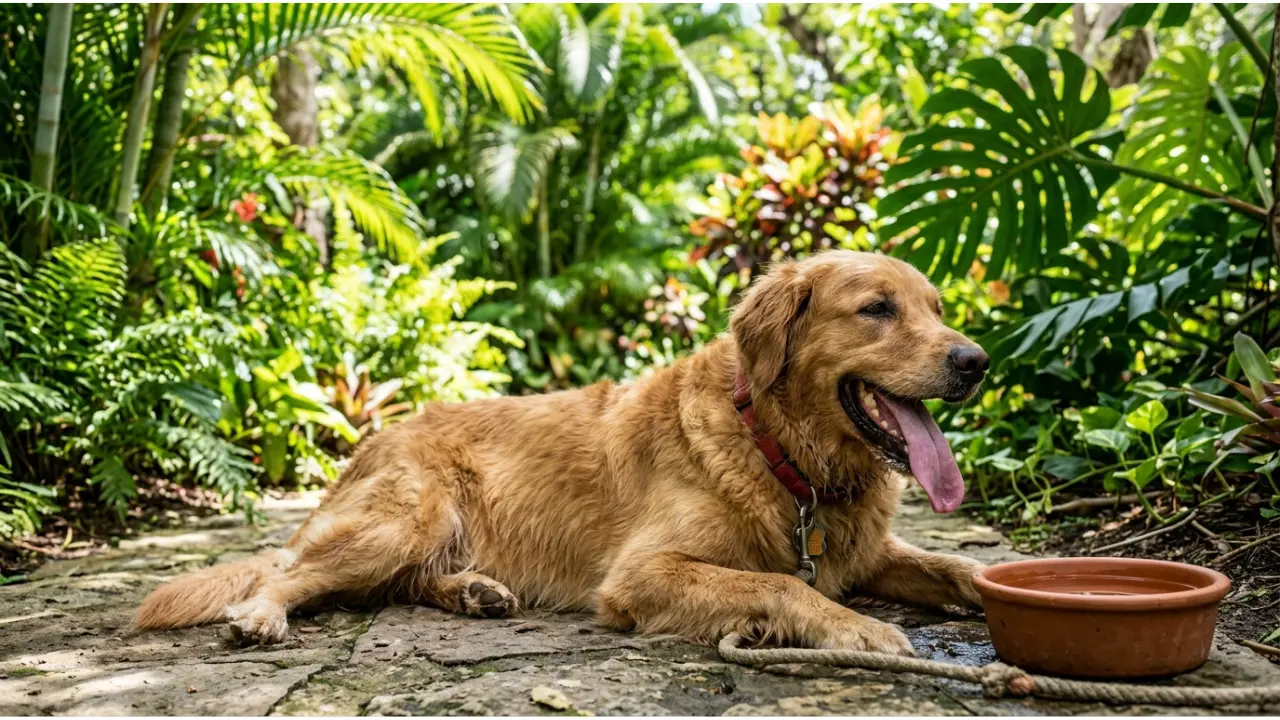
Heavy, noisy panting that does not slow down even when the dog is resting in shade is one of the first signals. Normal panting from exercise settles relatively quickly once the dog stops moving. Panting that stays loud and rapid after rest is a sign the body is struggling to cool itself.
Excessive drooling, often with thick or stringy saliva, accompanies the panting. The dog's mouth may look wetter than usual and the saliva may be thicker than normal.
Restlessness and agitation. An overheating dog often cannot settle. They may pace, keep changing position, seem distressed, and be unable to relax even when brought into shade or a cooler space.
Bright red gums and tongue. Check the color of your dog's gums. Healthy gums are pink. Bright red, almost cherry-colored gums are a clear sign the body is responding to serious heat stress. This is one of the most reliable early indicators.
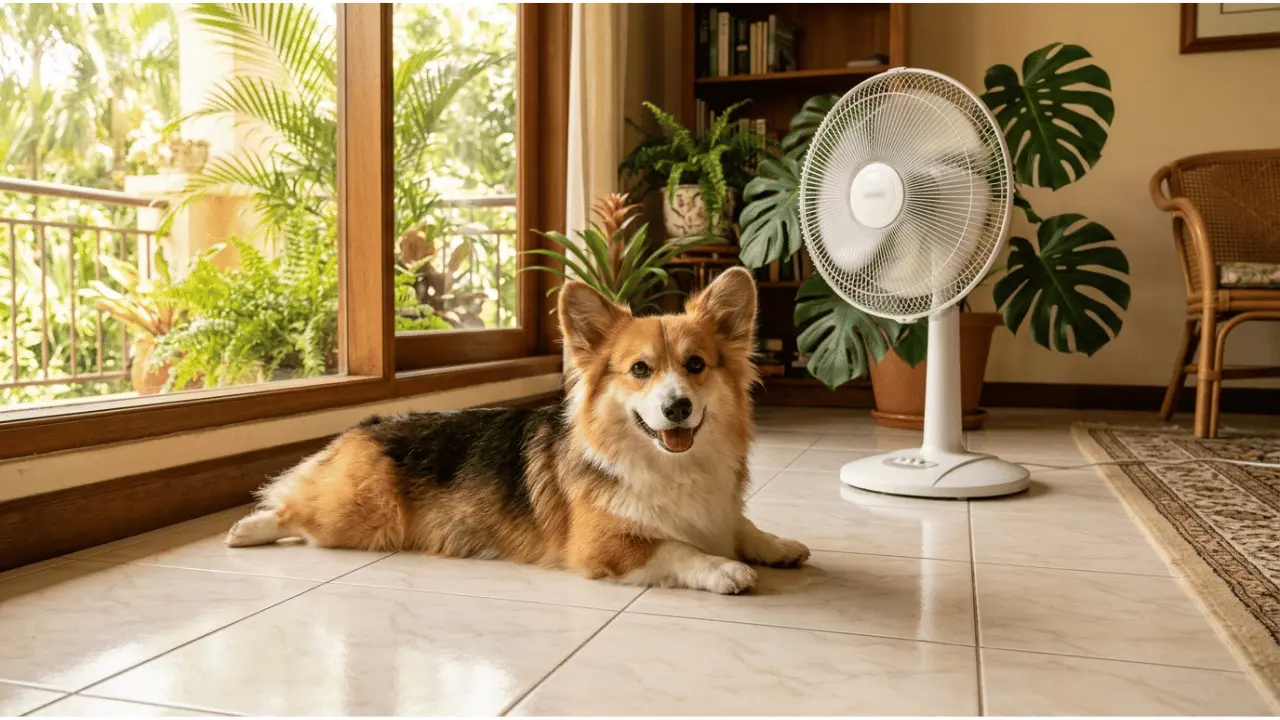
Seeking out cool surfaces obsessively, pressing against tiled floors, moving into shade and refusing to leave, lying flat against the ground. A dog doing this is telling you they are already struggling with their temperature.
Signs It Has Become Serious
If the early signs go unaddressed, heat stroke progresses quickly. At this stage, every minute matters.
Vomiting and diarrhea, sometimes with blood. The digestive tract is sensitive to heat damage and shuts down or bleeds under extreme temperature stress.
Weakness, stumbling, or uncoordinated movement. A dog who suddenly cannot walk straight or keeps falling over is showing signs of neurological involvement from overheating.
Glazed or unfocused eyes. The dog may look dazed, not tracking movement normally, or staring blankly.
Muscle tremors or seizures. At this point the dog's body temperature is critically high and brain function is being affected.
Collapse or loss of consciousness. This is the most advanced and dangerous stage. A dog who has collapsed from heat stroke needs a vet immediately.
What to Do Immediately
Move the dog out of the heat right away. Into an air-conditioned room, into the shade, anywhere cooler than where they are. Then start active cooling.
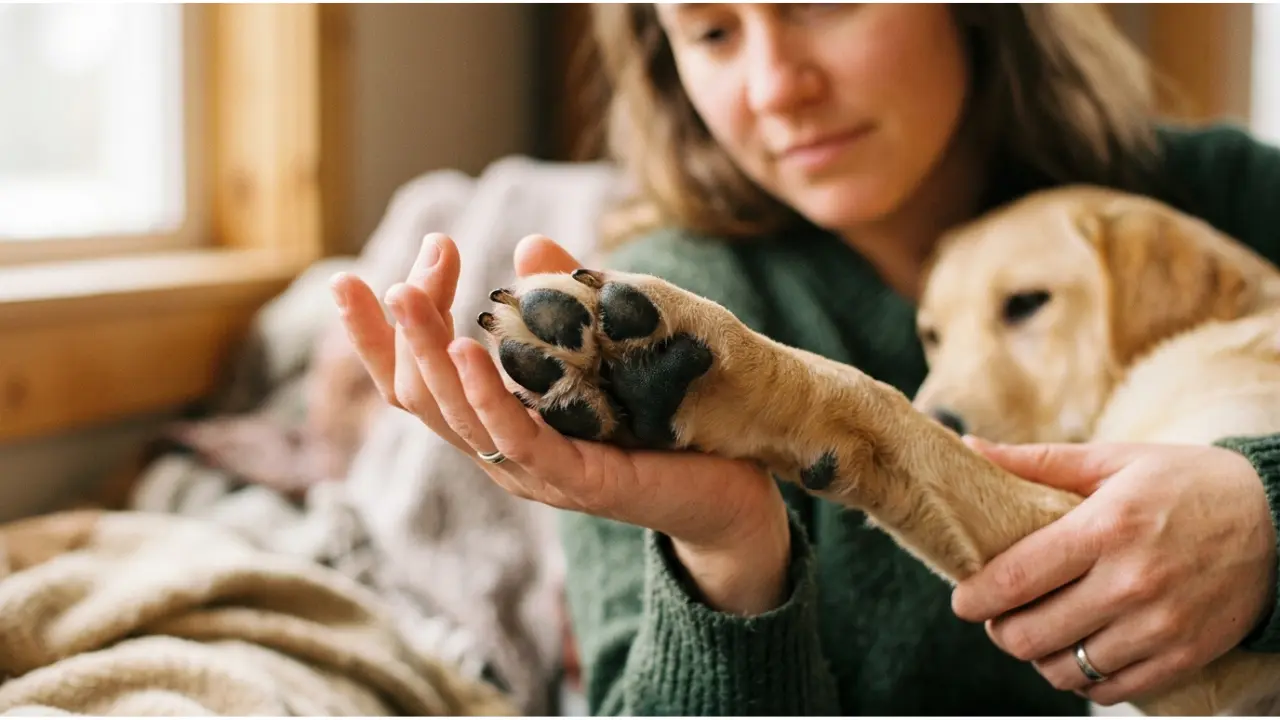
Use cool water, not cold or icy. Wet the dog's paws, armpits, groin, and neck with cool tap water. These areas have more blood vessels close to the surface and cool the blood more efficiently than wetting the back or sides. You can also lay wet towels over these areas, but replace them frequently because the towel absorbs the dog's body heat quickly and becomes warm.
If you have a fan, direct it at the wet areas. Evaporative cooling on moving air is significantly more effective than wet towels alone.
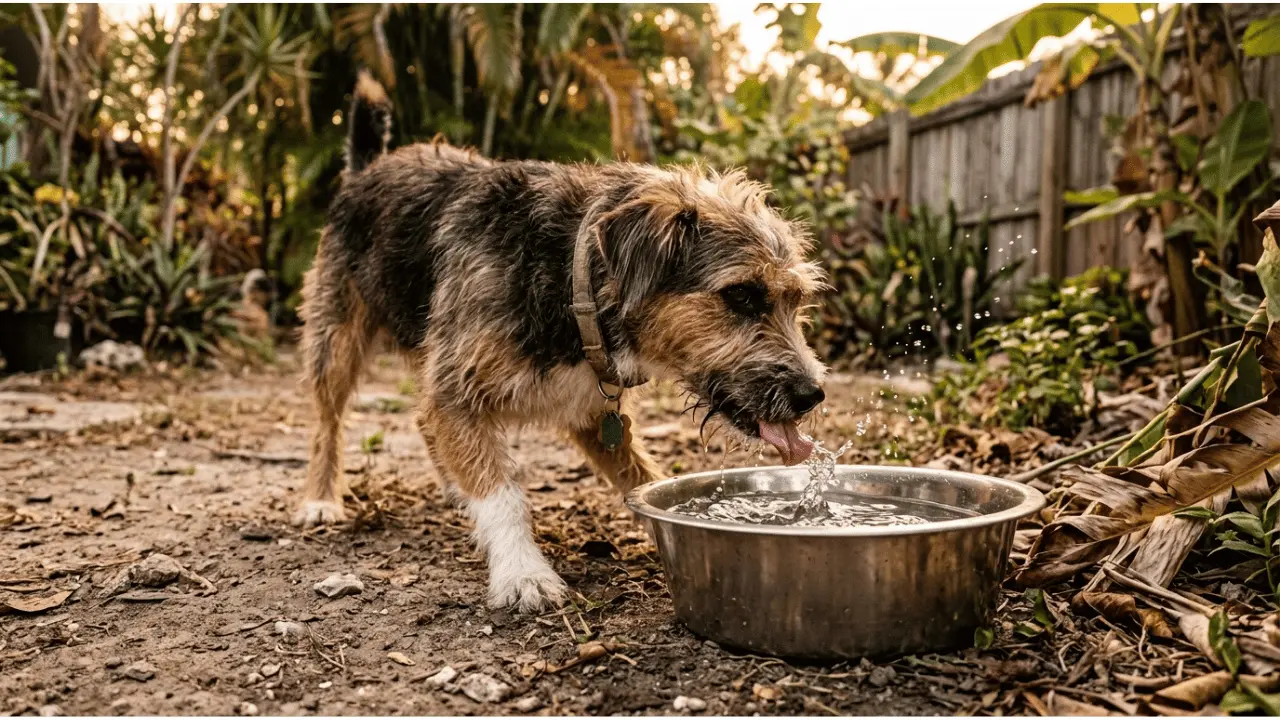
Offer small amounts of cool water to drink if the dog is conscious and able to swallow. Do not force water into a dog who cannot drink voluntarily. Do not give ice to eat, for reasons explained below.
Take the dog to a vet even if they seem to be improving. Internal damage from heat stroke is not always visible from the outside, and organ function needs to be checked. Kidney failure from heat stroke can develop hours after the acute crisis appears to have passed.
What Not to Do
Do not use ice water or ice packs directly on the dog. This is the most important thing to get right. Applying ice or very cold water causes peripheral blood vessels to constrict, which traps heat in the core rather than letting it escape. It can also cause shock. Cool water is what you want, not cold.
Do not cover the dog in a soaking wet towel and leave it. A wet towel that sits without airflow insulates as the water warms up. Either keep replacing it with freshly cooled towels or use a fan to keep air moving over it.
Do not give human pain relievers like paracetamol or aspirin to bring down the temperature. These are toxic to dogs and will make the situation worse.
Do not wait to see if the dog improves on their own once serious signs appear. Heat stroke at the vomiting, stumbling, or collapsing stage needs professional treatment. You cannot manage it at home.
Preventing Heat Stroke
In a tropical climate, prevention is mostly about routine habits. Walk in the early morning or after dark when temperatures drop. Never leave a dog in a parked car, even with windows cracked, even for a few minutes. Always carry water on walks and offer it frequently, not just when the dog asks.
Make sure your dog has access to shade and cool surfaces at home throughout the day. Tiled floors, a fan, or air conditioning in the hottest part of the day are all worth providing. Keep exercise intensity lower during heatwaves or unusually humid stretches. Watch for dehydration signs as a companion issue, because a dog who is already dehydrated overheats much faster.
Knowing your dog's individual risk level matters too. If you have a flat-faced breed, a senior dog, or an overweight dog, take the heat more seriously than you might for a young, fit, medium-sized dog. For them, conditions that feel merely warm to us can become genuinely dangerous in a short amount of time. Building heat safety into your daily routine with your dog is a year-round habit in this climate, not just a summer consideration.