More Common Than Most People Realize
Boredom in dogs tends to get dismissed as a minor issue or chalked up to the dog just being "a handful." But chronic boredom is genuinely uncomfortable for dogs, and the behaviors it produces, chewing furniture, barking at nothing, pestering you relentlessly, digging up the garden, are not personality flaws. They are a dog's way of creating stimulation when none is available.
Dogs are working animals by nature. Even breeds we think of as companion dogs were selectively bred for specific jobs: herding, hunting, guarding, retrieving. When a dog sits in an apartment or house with nothing to do for most of the day, that instinct to be active and engaged does not just switch off. It comes out sideways.
Signs Your Dog Is Bored
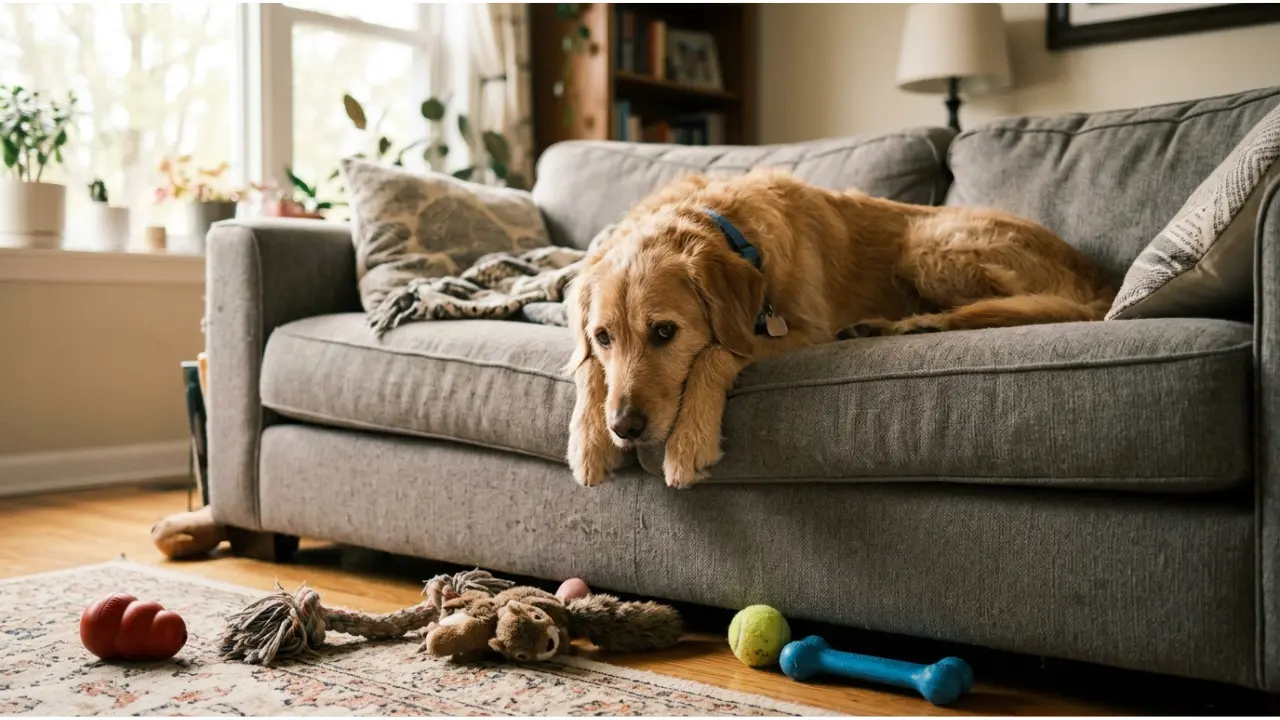
Destructive chewing. This is one of the most reliable signs. A dog who chews furniture, shoes, cables, or anything they can get to when left alone or when you are busy is almost always under-stimulated. Chewing releases endorphins and occupies the mouth and brain at the same time. When nothing else is available, furniture works.
Excessive barking at nothing obvious. A dog that barks at the wall, at sounds outside, or just seems to be barking for the sake of it may be creating their own entertainment. Barking is stimulating. It involves the body and produces a response from the environment, even if that response is just the neighbor's dog barking back.
Pestering and attention-seeking that will not stop. Nudging your hand, dropping a toy on your lap every two minutes, pawing at you while you are working, barking at you directly, sitting and staring at you with an intensity that is hard to ignore. These are all ways a bored dog recruits you into providing stimulation. Some of it is sweet, but when it is constant and cannot be redirected, it usually means the dog needs more than they are getting.
Digging. Dogs dig out of boredom, out of instinct, and sometimes out of stress. A dog who suddenly starts digging up the garden or scratching at floors and carpets when there is no obvious reason is likely trying to occupy themselves.
Sleeping far more than usual. Dogs sleep a lot normally, anywhere from 12 to 14 hours a day for adult dogs. But a dog who seems to do nothing but sleep, shows no enthusiasm for walks or play, and appears flat and unresponsive may be checked out from boredom rather than just resting. This one is easier to miss because it does not cause obvious problems, but it is still a welfare issue.
Eating grass or other non-food items. Bored dogs sometimes graze, chew sticks, eat dirt, or mouth objects around the house. When there is nothing interesting to do, the mouth finds something anyway.
Hyperactivity that is hard to settle. This seems like the opposite of boredom, but a dog who has been under-stimulated all day and then cannot calm down when you finally interact with them is often reacting to accumulated under-stimulation. The overexcitement at walks, at meal times, or when you pick up the lead is partly their energy finally having an outlet.
Boredom vs Anxiety: Knowing the Difference
Boredom and separation anxiety can look similar on the surface, both can cause destructive behavior and excessive vocalization when alone. The distinction matters because the fix is different.
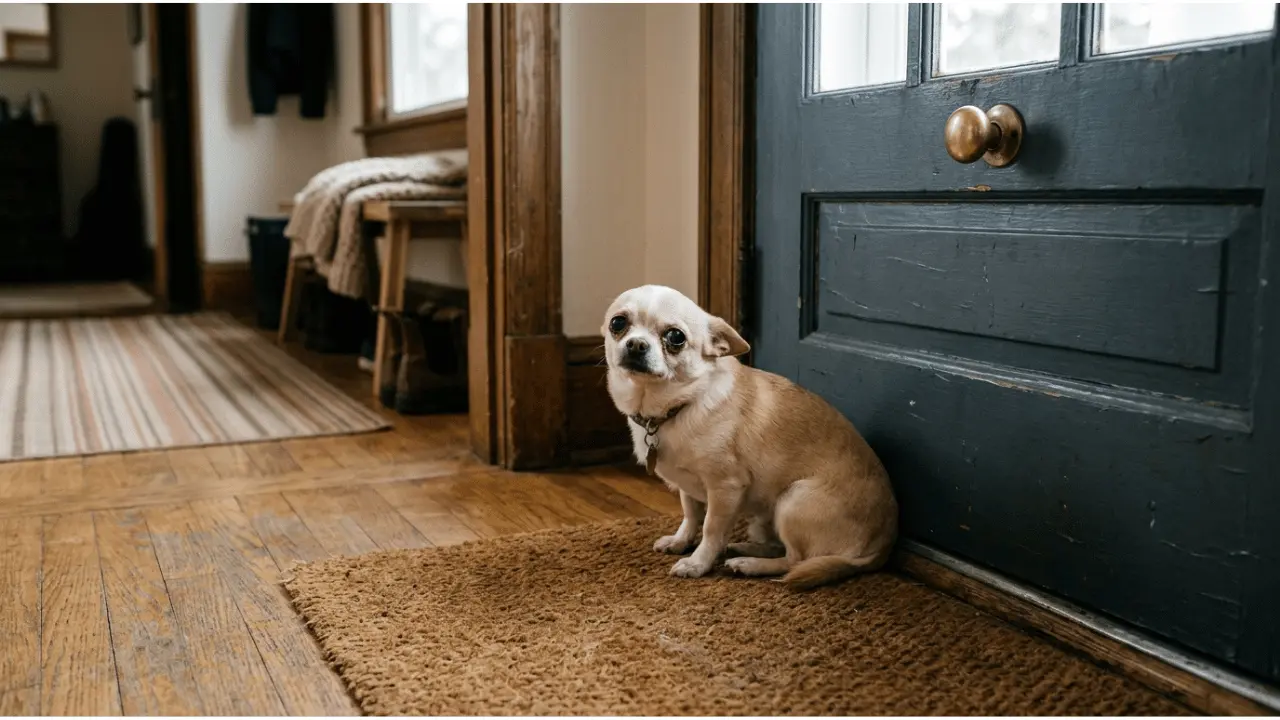
A bored dog tends to be fairly relaxed when you are home and becomes destructive or noisy primarily when there is nothing to do. An anxious dog is distressed specifically about your absence, not just about having nothing to do. They may panic at the cues that precede you leaving, such as picking up your keys or putting on shoes, and the destruction or barking starts immediately after you leave rather than building gradually through the day.
Some dogs have both. They are under-stimulated and also anxious about being alone. In those cases, both issues need to be addressed separately.
How Much Stimulation Do Dogs Actually Need?
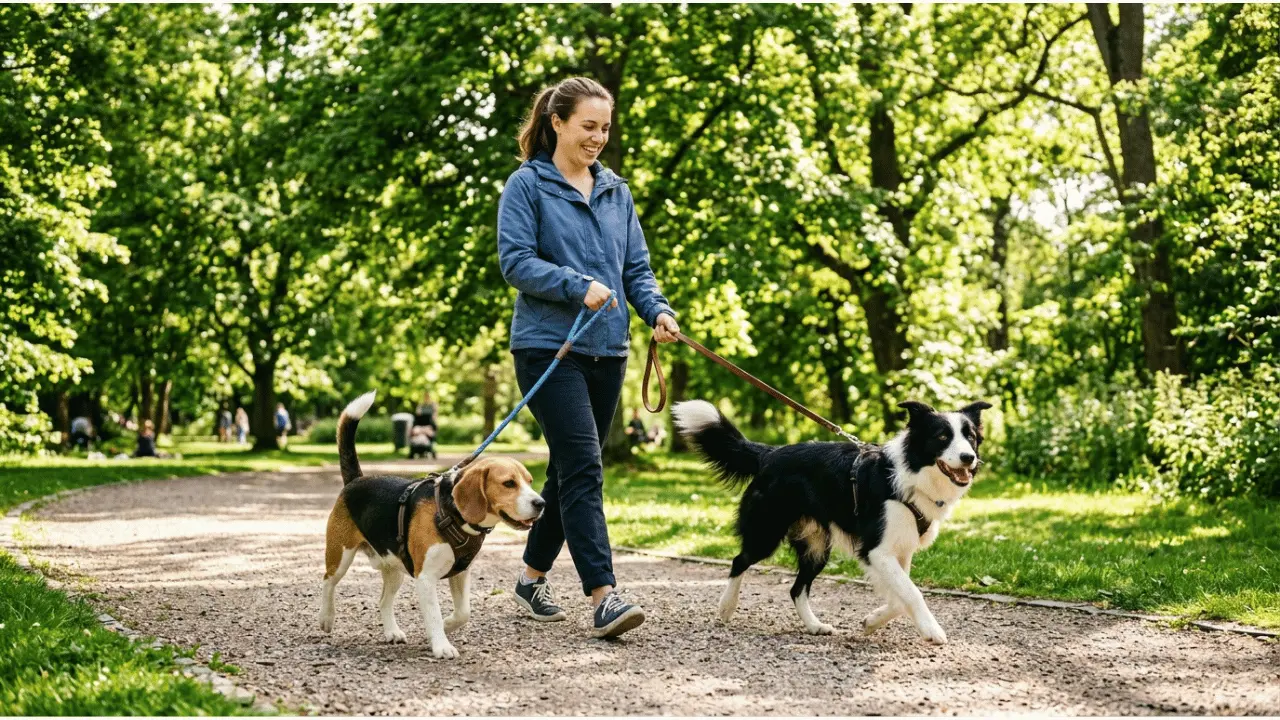
This varies a lot by breed, age, and individual temperament. A Border Collie needs significantly more mental and physical engagement than a Basset Hound. A young dog needs more than a senior. But as a rough baseline, most adult dogs benefit from at least one solid walk per day, some form of training or puzzle activity a few times a week, and regular social interaction.
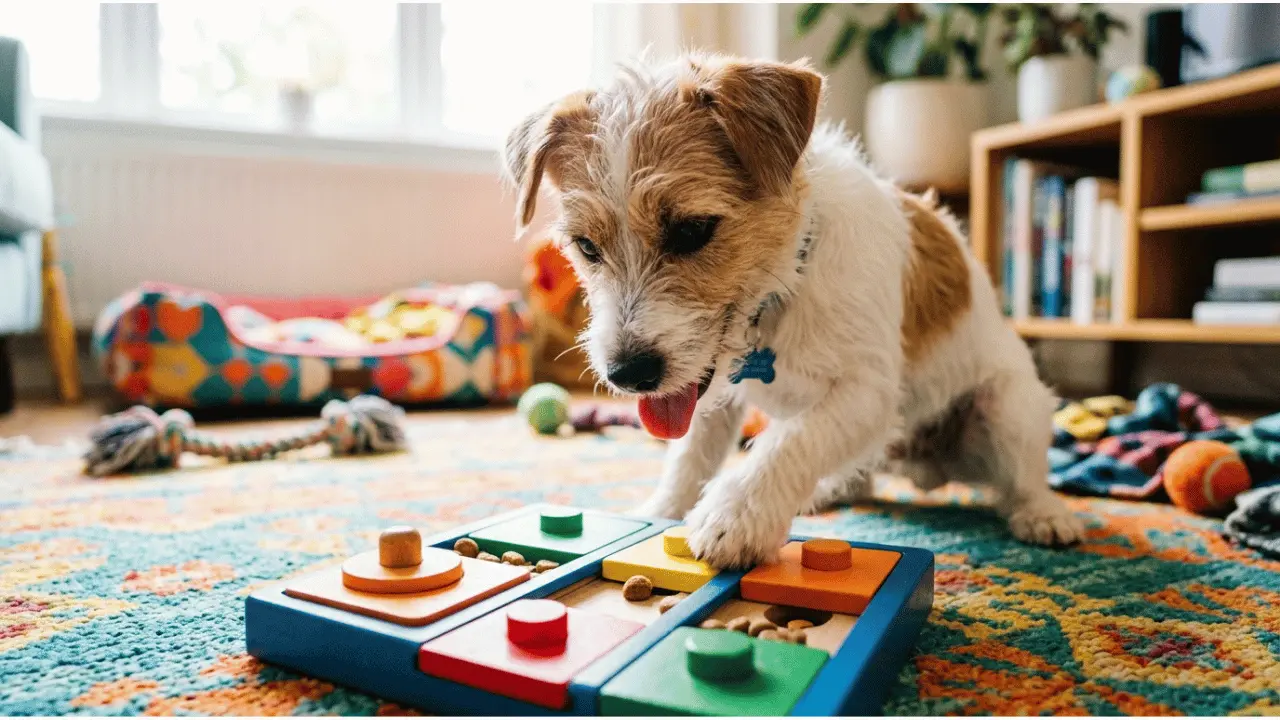
The mental side is often underestimated. Physical exercise tires the body but not necessarily the brain. A dog who goes on a 30-minute walk and then spends the next eight hours doing nothing mentally can still be bored. Training sessions, sniff games, food puzzles, and enrichment activities engage the brain in a way that physical exercise alone does not.
What Actually Helps
The most effective thing is to add structured activities to your dog's day rather than just hoping they find their own entertainment. A 10-minute training session in the morning costs very little time but gives the brain a workout. A Kong stuffed with food and frozen overnight gives the dog something to work at for 20 minutes. A sniff walk where the dog is allowed to stop and smell everything gives them mental stimulation that a brisk walk does not.
Rotating toys helps too. Dogs habituate quickly to the same objects, but putting toys away and bringing them back out after a week makes them interesting again. New smells, new environments, and new challenges all help break the monotony. If you have a garden, hiding food around it and letting the dog sniff it out is one of the easiest enrichment activities there is and it tires them out far more efficiently than just letting them run around.
For dogs who are alone for long stretches of the day, doggy daycare, a dog walker, or even a second dog are more significant solutions. Some dogs genuinely struggle with long solo hours, and no amount of toys fully compensates for social interaction and movement throughout the day. Regular walks remain the simplest baseline investment in your dog's wellbeing.